
Calobatina
Enderlein, 1922
Species Guides
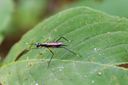
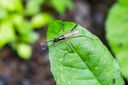
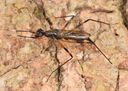
1Calobatina is a of stilt-legged flies in the Micropezidae, established by Enderlein in 1922. The genus contains at least two described , including Calobatina geometra. These flies are characterized by their elongated, stilt-like legs and distinctive foreleg-waving . The only species with documented natural history information, C. geometra, has been observed aggregating on standing dead white oak trunks in dry-mesic upland deciduous forest.
Pronunciation
How to pronounce Calobatina: /ˌkal.oʊˈbæ.tɪ.nə/
These audio files are automatically generated. While they are not always 100% accurate, they are a good starting point.
Identification
Members of this can be distinguished from other Micropezidae by their extremely elongated middle and hind legs, giving them a 'stilt-legged' appearance. Calobatina geometra specifically shows a strong resemblance to ichneumonid wasps, with a white band above the black feet on the forelegs that are waved conspicuously in front of the body. The foreleg-waving , possibly serving as auxiliary sensory function given the short typical of Diptera, is a notable field characteristic.
Images
Habitat
Based on observations of C. geometra, include dry-mesic upland deciduous forest with standing dead white oak (Quercus alba) trees. The specific microhabitat requirements for other in the are not documented.
Distribution
The is known from North America. Calobatina geometra has been recorded from Missouri. Additional distribution data for the genus and other is not available from the provided sources.
Host Associations
- Quercus alba - siteC. geometra observed congregating on trunks of standing dead white oaks
Behavior
Calobatina geometra exhibits distinctive foreleg-waving , with the white-banded forelegs moved conspicuously in front of the body. This may function in intraspecific communication or as a defensive mimicry display. The has been observed forming on tree trunks.
Similar Taxa
- IchneumonidaeCalobatina geometra appears to mimic parasitic in this , with similar body proportions and coloration. The mimicry is considered strong enough to suggest purposeful rather than chance resemblance.
- Other Micropezidae generaDistinguished by the extreme elongation of middle and hind legs and the distinctive foreleg-waving with white-banded forelegs.
More Details
Taxonomic note
The was established by Enderlein in 1922. At least two are described in the genus, though only C. geometra has substantial observational records in the provided sources.
Behavioral uncertainty
The function of foreleg-waving in C. geometra remains unclear—whether for intraspecific communication, deception, or sensory due to reduced is unknown. The author notes 'much more that is unknown about these insects than is known.'