
Neomyia cornicina
(Fabricius, 1775)
Small False Greenbottle
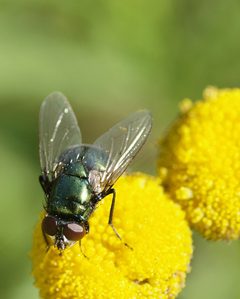
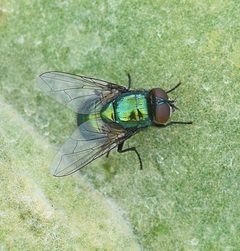
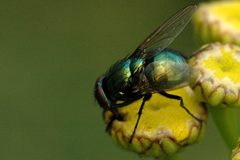
Neomyia cornicina is a common muscid fly native to the Palaearctic region, with introduced in the Nearctic. and larvae feed on cattle , contributing to dung decomposition. The is frequently used as a model organism in ecotoxicological studies examining the effects of veterinary pharmaceuticals on non-target dung fauna.
Pronunciation
How to pronounce Neomyia cornicina: /niːˈɒmɪə kɔːˈnɪsɪnə/
These audio files are automatically generated. While they are not always 100% accurate, they are a good starting point.
Identification
Distinguished from similar Muscidae by its greenish metallic coloration; the 'Small False Greenbottle' suggests similarity to greenbottle flies (Calliphoridae) but smaller size and placement in Muscidae. Specific diagnostic features require examination of morphological characters not detailed in available sources.
Images
Habitat
Cattle in pasture and agricultural settings; also recorded in Mediterranean oak forest where spatial and temporal distribution patterns adapt to climatic conditions.
Distribution
Native to the Palaearctic region; introduced to the Nearctic. Documented presence in Belgium, Denmark, Norway, Madeira (Portugal), and the Iberian Peninsula.
Diet
; larvae and feed on moist cattle .
Life Cycle
Larval development occurs in cattle ; emerge and continue to feed on dung.
Behavior
Exhibits thermophilous , adapting spatial and temporal distribution to climatic conditions throughout activity. show reduced locomotory ability (slower escape time, delayed righting response) and decreased activity (more time standing, less and ) when feeding on containing ivermectin residues. Mating attempts by males are more frequent and prolonged when paired with control females versus ivermectin-exposed females.
Ecological Role
Contributes to decomposition as part of the insect dung fauna; serves as a non-target for assessing environmental impacts of veterinary pharmaceuticals on dung-inhabiting .
Human Relevance
Used extensively as a model organism in ecotoxicological research on effects of synthetic (deltamethrin, α-cypermethrin, cyfluthrin, flumethrin) and macrocyclic lactones (ivermectin, eprinomectin) on non-target fauna. Exposure to these compounds in cattle dung causes increased larval mortality, reduced survival, inhibited ovarian development, decreased feeding activity, and reduced adult body size.
Sources and further reading
- BugGuide
- Wikipedia
- GBIF taxonomy match
- iNaturalist taxon
- NCBI Taxonomy
- Effects of ingestion of dung containing ivermectin on aspects of behaviour in the fly Neomyia cornicina
- Comportamiento espacio-temporal de Neomyia cornicina (Fabricius, 1781) en un ecosistema de bosque mediterráneo de la peninsula ibérica (Diptera : Muscidae)
- Topical treatment of calves with synthetic pyrethroids: effects on the non-target dung fly Neomyia cornicina (Diptera: Muscidae)
- Mating combinations of control and ivermectin-fed dung flies Neomyia cornicina (Diptera: Muscidae): effects on mating behaviour, oviposition and ovarian development
- Pour-on formulation of eprinomectin for cattle: Fecal elimination profile and effects on the development of the dung-inhabiting Diptera Neomyia cornicina (L.) (Muscidae)