
Fannia
Robineau-Desvoidy, 1830
Species Guides
8- Fannia canicularis(Lesser House Fly)
- Fannia difficilis
- Fannia fuscula
- Fannia melanura
- Fannia pellucida
- Fannia pusio(Chicken Dung Fly)
- Fannia sociella
- Fannia subpellucens
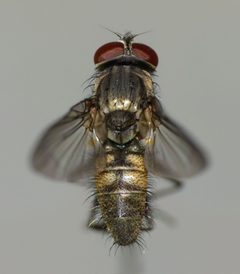
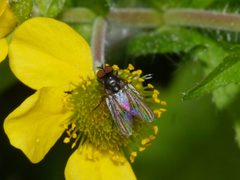
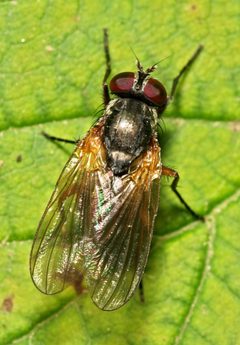
Fannia is a large of flies in the Fanniidae, comprising approximately 288 . Originally described by Robineau-Desvoidy in 1830, many species were formerly classified under Musca. The genus is notable for its applications, with several species serving as for decomposition studies. Species are distributed across the Neotropical and other regions, with recent records extending known ranges in South America.
Pronunciation
How to pronounce Fannia: /ˈfæn.i.ə/
These audio files are automatically generated. While they are not always 100% accurate, they are a good starting point.
Images
Habitat
Associated with decomposing organic matter; collected in contexts using traps above animal carcasses. Specific microhabitat preferences vary by .
Distribution
Neotropical Region; recorded in Uruguay (Pando, Canelones), with range extensions documented eastward in South America. Global distribution spans multiple continents given the size, though precise ranges require -level data.
Seasonality
Activity recorded February to April in Uruguay study; broader seasonal patterns vary by and region.
Ecological Role
; associated with decomposition processes. Specific functions likely vary by .
Human Relevance
Significance in for estimating postmortem intervals; presence on decomposing carcasses provides timing information for criminal investigations.
Similar Taxa
More Details
Taxonomic History
The was established by French entomologist Jean-Baptiste Robineau-Desvoidy in 1830. A substantial number of were transferred from Musca during subsequent taxonomic revisions.
Research Significance
First study in Uruguay (2011) documented Fannia fusconotata and Fannia sanihue, establishing baseline data for the region and demonstrating the 's importance in carrion insect studies.