
Sapromyza
Fallén, 1810
Species Guides
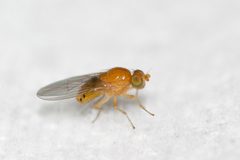
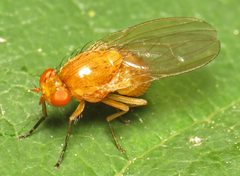
2Sapromyza is a of small flies in the Lauxaniidae, containing at least 330 described . The genus has a broad distribution across the Holarctic region and beyond, with documented records from Europe, the Middle East, and North America. Taxonomic revisions have focused on regional species inventories and identification keys, particularly in understudied areas such as Israel and Iran.
Pronunciation
How to pronounce Sapromyza: /ˌsæprəˈmaɪzə/
These audio files are automatically generated. While they are not always 100% accurate, they are a good starting point.
Identification
-level identification within Sapromyza relies primarily on male terminalia characters, as illustrated in regional taxonomic revisions. The is distinguished from other Lauxaniidae by combinations of , thoracic, and abdominal chaetotaxy, though specific diagnostic features for the genus as a whole are not well-documented in the available sources. Regional keys exist for Israel (nine species) and Iran (seventeen species).
Images
Distribution
Recorded from Europe (Denmark, Norway, Sweden), the Middle East (Israel, Iran), and North America (Vermont, United States). The appears to have a broad Holarctic distribution with additional records in various temperate regions.
More Details
Taxonomic complexity
The contains multiple subgenera, including Sapromyzosoma, as evidenced by such as S. (Sapromyzosoma) quadripunctata and S. (Sapromyzosoma) quadricincta. The subgeneric classification indicates ongoing refinement of the genus's internal structure.
Species discovery rate
Recent taxonomic work continues to reveal new , with five species described as new from Israel and three from Iran in recent decades, suggesting the true diversity of the remains incompletely documented.
Sources and further reading
- BugGuide
- Wikipedia
- GBIF taxonomy match
- iNaturalist taxon
- NCBI Taxonomy
- Catalogue of Life
- The genus Sapromyza (Diptera: Lauxaniidae) in Iran with description of three new species
- A review of the genus Sapromyza Fallén in Israel with remarks on S. (Sapromyzosoma) quadripunctata (Linneaus) (Diptera: Lauxaniidae)