
Homoneura conjuncta
(Johnson, 1914)
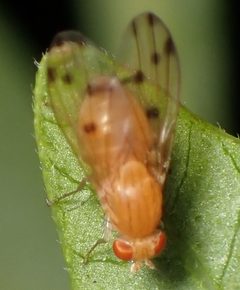
Homoneura conjuncta is a of small fly in the Lauxaniidae, commonly known as lauxaniid flies. The Homoneura is characterized by often colorful or patterned species, with H. conjuncta specifically noted for its orange coloration. The species has been observed in association with decaying pumpkins and other fermenting organic matter. It is known from limited distribution records in the northeastern United States.
Pronunciation
How to pronounce Homoneura conjuncta: //ˌhɒmoʊˈnjʊərə kənˈdʒʌŋktə//
These audio files are automatically generated. While they are not always 100% accurate, they are a good starting point.
Identification
The orange coloration of H. conjuncta is distinctive among lauxaniid flies and may aid in field recognition. Positive identification to level likely requires examination of wing venation patterns, chaetotaxy (bristle arrangement), and male genitalia structures, which are standard characters for distinguishing Homoneura species. Similar orange-colored Homoneura species exist, necessitating careful comparison with reference collections or expert determination.
Images
Appearance
Small fly with orange coloration. Detailed morphological description of this is not well documented in available sources. Members of the Homoneura typically have patterned wings and compact bodies.
Habitat
Associated with decaying organic matter, particularly fermenting fruits. Documented observations include visitation to jack-o'-lanterns and pumpkins in autumn conditions.
Distribution
Documented from Vermont and other parts of the northeastern United States. Distribution records are sparse, with only two iNaturalist observations and limited collection records available.
Seasonality
Observed in autumn (late October), coinciding with availability of decaying pumpkins and fermenting organic matter. Seasonal patterns beyond this are undocumented.
Behavior
Has been observed visiting decaying pumpkins, where it likely feeds on fermenting substrates. The was noted as abundant enough to be a conspicuous visitor to jack-o'-lanterns in field observations.
Ecological Role
Participant in decomposition processes, likely contributing to nutrient cycling through consumption of decaying plant matter and associated microorganisms.
Human Relevance
Minor relevance as a visitor to decomposing pumpkins and jack-o'-lanterns. No documented economic or medical significance. Not known to be a pest of fresh produce or stored products.
Similar Taxa
- Other Homoneura speciesMany Homoneura share similar small size and patterned appearance; orange coloration is not unique to H. conjuncta within the
- Other LauxaniidaeSmall size and general body plan shared with other lauxaniid flies; wing patterns and genitalia structure required for definitive separation
More Details
Taxonomic Note
Originally described by Johnson in 1914. The epithet 'conjuncta' likely refers to a morphological feature (possibly connected or joined wing markings), though the etymology is not explicitly documented in available sources.
Data Deficiency
This is poorly documented in the literature. Available information derives from a single field observation blog post and limited specimen records. Basic biological parameters including complete distribution, , and larval remain unknown.