
Camptoprosopella
Hendel, 1907
Species Guides
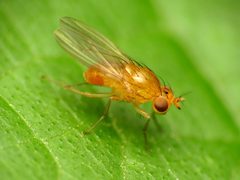
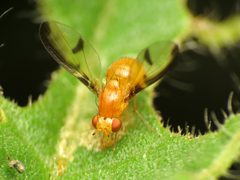
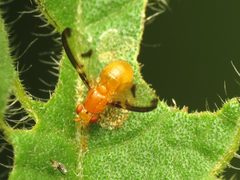
3Camptoprosopella is a of true flies in the Lauxaniidae, established by Hendel in 1907. The genus contains over 30 described distributed primarily in the Americas, with records ranging from North America through Central America to South America. Species in this genus are small to medium-sized flies, many of which were described by Canadian dipterist G.E. Shewell in 1939.
Pronunciation
How to pronounce Camptoprosopella: /kæmp.toʊ.prəˈsoʊ.pə.lə/
These audio files are automatically generated. While they are not always 100% accurate, they are a good starting point.
Identification
Camptoprosopella are distinguished from other Lauxaniidae by a combination of characters including the structure of the , particularly the shape of the and the arrangement of bristles on the and gena. The genus name refers to the arched or curved facial profile (from Greek kampter, bent, and prosopon, face). Specific species identification requires examination of male terminalia and detailed chaetotaxy, with many species separated by subtle differences in bristle length, wing venation patterns, and coloration of the palps and .
Images
Distribution
of Camptoprosopella are recorded from the Nearctic and Neotropical regions, including the United States, Canada, Mexico, Central America, the Caribbean, and South America. The shows highest diversity in tropical and subtropical zones, with some species extending into temperate North America.
Similar Taxa
- LauxaniaBoth are in Lauxaniidae with similar overall body plan, but Lauxania typically has a more flattened facial profile and different wing venation, particularly in the position of the crossveins.
- MinettiaAnother lauxaniid with overlapping geographic range; Minettia often have more pronounced thoracic stripes and differ in male genitalia structure.
- CalliopumEuropean and Holarctic lauxaniid that can be confused with Camptoprosopella, but Calliopum generally have shorter and different proportions.
More Details
Taxonomic history
The was erected by Friedrich Hendel in 1907 with Camptoprosopella xanthoptera as the type . G.E. Shewell contributed substantially to the of this genus, describing 22 of the 33 known species in his 1939 revision.