
Paracoenia
Cresson, 1935
shore flies
Species Guides
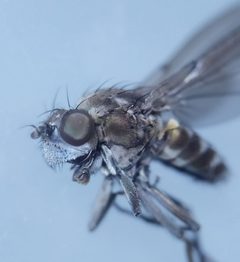
1Paracoenia is a of shore flies (Diptera: Ephydridae) found in aquatic and semi-aquatic . within this genus are associated with thermal springs, saline or alkaline lakes, and pond margins. Larvae develop in moist substrates at water edges, while and larvae feed on microorganisms including filamentous blue-green . The genus serves as an intermediate for parasitic water mites and has been studied as an indicator of stability in thermal environments.
Pronunciation
How to pronounce Paracoenia: //ˌpær.əˈsiː.ni.ə//
These audio files are automatically generated. While they are not always 100% accurate, they are a good starting point.
Images
Habitat
Thermal spring effluents; moist sand or mud along shorelines of saline or alkaline lakes and ponds; filamentous blue-green algal mats in thermal systems.
Distribution
Palearctic (Denmark, Norway, Sweden); Yellowstone thermal effluent systems (North America).
Seasonality
May to October (based on P. fumosa records).
Diet
Filamentous blue-green ; microorganisms (including algae and bacteria) in hot spring effluents.
Host Associations
- Partnuniella - Water mite larvae parasitize Paracoenia flies; and larval load serve as indicators of algal mat stability.
Life Cycle
, three larval instars, pupa. Larvae develop in moist sand or mud at water's edge. High enables exploitation of temporary cool spots in algal mats.
Behavior
Grazing on algal mats; exploitation of temporary cool spots in thermal environments due to rapid reproductive capacity.
Ecological Role
Primary consumer (grazer) in thermal spring and saline lake ; intermediate for water mites; trophic link between blue-green and higher ; for algal mat stability through mite levels.
Similar Taxa
- EphydraAlso feeds on microorganisms in hot springs; differs in specific preferences and morphological details.
Sources and further reading
- BugGuide
- Wikipedia
- GBIF taxonomy match
- iNaturalist taxon
- NCBI Taxonomy
- Catalogue of Life
- Biology and Immature Stages of Paracoenia bisetosa (Coquillett) (Diptera: Ephydridae)1
- Feeding by Paracoenia and Ephydra (Diptera> Ephydridae) on the Microorganisms of Hot Springs
- Ecology of yellowstone thermal effluent systems: Intersects of blue-green algae, grazing flies (Paracoenia, Ephydridae) and water mites (Partnuniella, Hydrachnellae)