
Mycodrosophila
Oldenberg, 1914
mushroom flies
Species Guides
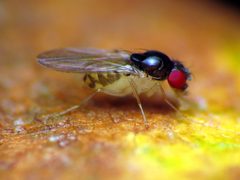
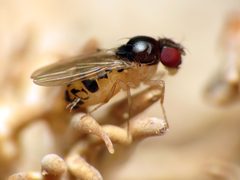
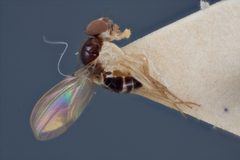
2Mycodrosophila is a of small vinegar flies comprising approximately 120-130 described . Members are obligately mycophagous, meaning they depend on fungi throughout their entire . The genus belongs to the monophyletic Zygothrica genus group alongside Hirtodrosophila, Paramycodrosophila, and Zygothrica. Species are distributed across the Neotropical and Palearctic regions, with some showing transcontinental ranges.
Pronunciation
How to pronounce Mycodrosophila: /ˌmaɪkoʊdroʊˈsɒfɪlə/
These audio files are automatically generated. While they are not always 100% accurate, they are a good starting point.
Identification
Identification to level requires examination of subtle morphological characters. within the genus often show minimal morphological divergence despite significant genetic differentiation; cryptic are common. For example, the M. projectans complex exhibits only subtle differences in and abdominal color patterns. Accurate identification typically requires molecular analysis or detailed examination of male genitalia.
Images
Habitat
Forest , particularly in association with fruiting bodies of macroscopic fungi. have been documented in Amazonian, Atlantic Forest, and Pampa biomes in Brazil, as well as temperate forest regions in the Palearctic. The obligatory association with fungal fruiting bodies restricts habitat suitability to areas supporting appropriate fungal .
Distribution
Neotropical region from Mexico to Brazil, including Amazonian, Atlantic Forest, and Pampa biomes; Palearctic region including South Siberia (Tuva), Central Federal District of Russia (Moscow City), and broader Transpalaearctic range for some .
Diet
Obligatory mycophagous; feeds on fungal spores and . Has been observed to consume bacteria and yeasts associated with fungal fermentation or fermentation by-products.
Host Associations
- macroscopic fungi - essential and food sourcefruiting bodies provide substrate for all life stages
- bacteria - food sourceassociated with fungal fermentation
- yeast - food sourceassociated with fungal fermentation by-products
Life Cycle
Complete dependence on fungi throughout all life stages. are collected resting on or flying over fungal fruiting bodies. Development from to adult occurs within fungal substrates.
Behavior
exhibit strong fidelity to fungal fruiting bodies, where they rest and oviposit. Some demonstrate sympatry and syntopy with closely related cryptic species, occupying widely overlapping . between ephemeral fungal resources has been proposed as an adaptive response to the patchy and temporary nature of fungal fruiting.
Ecological Role
Decomposer and saprophagous role in fungal decomposition systems. and larvae contribute to nutrient cycling within fungal . May serve as for horizontal transfer of endosymbionts such as in mushroom microhabitats where multiple drosophilid co-occur.
Similar Taxa
- HirtodrosophilaAlso obligately mycophagous and belongs to same Zygothrica group; distinguished by specific morphological characters not detailed in available sources
- ZygothricaShares mycophagous habit and phylogenetic grouping; -level identification requires detailed morphological or molecular analysis
- ParamycodrosophilaClosely related mycophagous in same ; separation based on established taxonomic characters
- DrosophilaSuperficially similar small drosophilid flies, but Drosophila are generally not obligately mycophagous and occupy broader
More Details
Cryptic species diversity
The exhibits substantial cryptic . The M. projectans complex demonstrates that morphologically similar can persist in sympatry and syntopy for millions of years (since the Miocene) with minimal morphological divergence despite significant genetic differentiation.
Phylogenetic position
Mycodrosophila is monophyletic and forms part of the Zygothrica group, a monophyletic of mycophagous drosophilid genera. This grouping represents a distinct evolutionary trajectory toward obligate within the Drosophilidae.
Sources and further reading
- BugGuide
- Wikipedia
- GBIF taxonomy match
- iNaturalist taxon
- NCBI Taxonomy
- Catalogue of Life
- New data on distribution of Mycodrosophila poecilogastra (Loew, 1874) (Diptera: Drosophilidae) in Russia
- Unveiling the Mycodrosophila projectans (Diptera, Drosophilidae) species complex: Insights into the evolution of three Neotropical cryptic and syntopic species.