
Chrysotimus
Loew, 1857
Species Guides
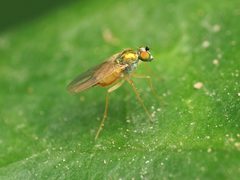
1Chrysotimus is a of long-legged flies ( Dolichopodidae) established by Loew in 1857. It has a distribution with records from Europe, including Denmark, Norway, and Sweden. The genus is likely with respect to several geographically restricted genera such as Alishanimyia. Some previously or alternatively placed in Chrysotimus have been reassigned to related genera like Guzeriplia.
Pronunciation
How to pronounce Chrysotimus: //ˌkrɪsoʊˈtaɪməs//
These audio files are automatically generated. While they are not always 100% accurate, they are a good starting point.
Identification
As a , Chrysotimus are distinguished within Peloropeodinae by combinations of genitalic and leg characters, though specific diagnostic features require species-level examination. The genus is distinguished from potentially segregates like Alishanimyia and Guzeriplia by subtle morphological differences in male terminalia and leg chaetotaxy. Accurate identification to species within Chrysotimus requires examination of or detailed original descriptions.
Images
Distribution
in distribution. Documented records include Denmark (DK), Norway (NO), and Sweden (SE). The has been reported from multiple continents, though precise range boundaries are obscured by taxonomic uncertainty and probable paraphyly.
Similar Taxa
- AlishanimyiaChrysotimus is probably with respect to this geographically restricted ; may require reassessment based on phylogenetic analysis.
- GuzeripliaSome (C. beijingensis, C. chlorinus, C. viridanus) are alternatively placed in Guzeriplia when that is recognized as separate; taxonomic boundaries remain unresolved.
More Details
Taxonomic Uncertainty
Chrysotimus is considered likely , meaning it does not represent a true monophyletic lineage. Several smaller of limited distribution (such as Alishanimyia) may be nested within Chrysotimus, suggesting the need for comprehensive revision.
Species Transfers
including C. beijingensis, C. chlorinus, and C. viridanus have been treated as members of Guzeriplia when that is accepted as distinct, reflecting ongoing instability in generic limits within Peloropeodinae.