
Ablabesmyia
Johannsen, 1905
Banded-leg Tanypods
Species Guides
4Ablabesmyia is a of non-biting midges in the bloodworm Chironomidae, comprising approximately 85 distributed across multiple continents. Larvae are aquatic and frequently associated with aquatic vegetation, macrophytes, or detrital substrates in freshwater . The genus is divided into four subgenera, with species documented from Europe, Asia, the Americas, and other regions. are typically collected using light traps.
Pronunciation
How to pronounce Ablabesmyia: //ˌæ.bləˈbɛs.mi.jə//
These audio files are automatically generated. While they are not always 100% accurate, they are a good starting point.
Identification
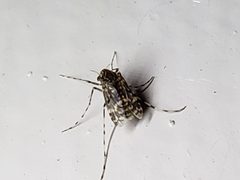
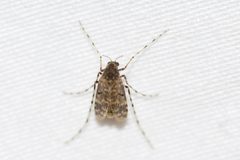
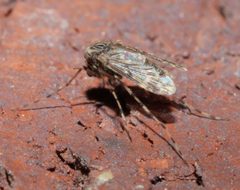
distinguished from other Tanypodinae by male genitalia and antennal structure; larvae separable from other by capsule and characteristics, with keys available for Nearctic and Neotropical immatures. Subgeneric classification (Ablabesmyia, Karelia, Sartaia, Asayia) based on adult and pupal morphology. A. basalis distinguished from A. monilis in Nearctic region by specific morphological criteria.
Images
Habitat
Freshwater aquatic environments including ponds, lakes, rivers, and streams. Larvae found in shallow oxygenated , associated with aquatic macrophytes, accumulated leaf litter, sandy substrates, and muddy sediments. Some occupy sublittoral zones in deep oligotrophic lakes. collected near water bodies, with some species in mountainous regions at approximately 1000 m elevation.
Distribution
Widespread across multiple biogeographic regions: Europe (widespread and common including A. longistyla, A. monilis, A. phatta); Asia (Oriental China with multiple species, Japan); North America (Canada from Alberta to Ontario, Manitoba, British Columbia; United States); South America (Brazil, Argentina including Patagonian lakes); Colombia (Cundinamarca, Huila, Meta, Chocó); Scandinavia (Denmark, Norway, Sweden).
Seasonality
period varies by and latitude; A. reissi in Argentina shows concentrated emergence during summer months (December-March); with overlapping cohorts documented in some species.
Diet
Larvae are , feeding on particulate organic matter and periphyton. Specific feeding habits for most not documented.
Life Cycle
Complete with , four larval instars, pupa, and stages. (two per year) with overlapping cohorts observed in some . Larval development proceeds through four instars with growth approximately following . Laboratory rearing from larva to adult has been achieved for several species.
Behavior
Larvae construct silken tubes in sediment. Some exhibit vertical in the water column related to oxygen and temperature gradients. of some species attracted to light traps. Swarming during period.
Ecological Role
Important secondary producer in freshwater ; significant contributor to benthic energy flow and nutrient cycling. Serves as prey item for fish and other aquatic . Role in of oligotrophic lakes documented for some .
Human Relevance
Used as bioindicators for water quality assessment in freshwater . Larvae contribute to natural supporting fish . No direct economic importance documented; non-biting do not pose nuisance to humans.
Similar Taxa
- Other Tanypodinae generaAblabesmyia distinguished by specific larval capsule and male genitalia structure; keys available for separation from Nearctic and Neotropical tanypodine .
- ChironomusAblabesmyia larvae lack the hemoglobin-rich blood that gives Chironomus larvae their characteristic red color; lack the distinctive patterns of many Chironomus .
More Details
Subgeneric classification
The contains four recognized subgenera: Ablabesmyia (sensu stricto), Karelia (first recorded from China in 2019), Sartaia (, based on A. metica), and Asayia. Subgeneric assignment based on morphological features of and pupae.
Research significance
Multiple descriptions and redescriptions published in recent decades, particularly from Brazil, China, and Canada, indicating active taxonomic revision and high diversity in previously understudied regions.
Sources and further reading
- BugGuide
- Wikipedia
- GBIF taxonomy match
- iNaturalist taxon
- NCBI Taxonomy
- Catalogue of Life
- Three new neotropical species of Ablabesmyia Johannsen, 1905 (Diptera: Chironomidae)
- The immature stages of Ablabesmyia (Sartaia) metica Roback, 1983 (Diptera: Chironomidae) with keys to subgenera
- Life history and secondary production ofAblabesmyia reissi(Diptera: Chironomidae) from Lake Escondido, Bariloche, Argentina
- Taxonomic review of Ablabesmyia Johannsen (Diptera: Chironomidae: Tanypodinae) from Oriental China, with descriptions of six new species
- Notes on Canadian Ablabesmyia Johannsen, with keys to known <br />Nearctic immatures of the genus (Diptera: Chironomidae)
- New species of Ablabesmyia Johannsen (Diptera, Chironomidae, Tanypodinae) from the Neotropical Region, with description of male adults and immature stages
- New Mitogenomes from the Genus Ablabesmyia (Diptera: Chironomidae, Tanypodiinae): Characterization and Phylogenetic Implications.