
Hydrobaenus
Fries, 1830
Hydrobaenus is a of non-biting midges in the Chironomidae, Orthocladiinae. are known from the Palaearctic region, including Europe, Russia, and Japan. The genus includes species associated with riverine and temporary water . Some species are known nuisance in populated areas.
Pronunciation
How to pronounce Hydrobaenus: //haɪdroʊˈbiːnəs//
These audio files are automatically generated. While they are not always 100% accurate, they are a good starting point.
Identification
-level identification relies heavily on male genitalia characters: anal point shape (cup-shaped, drop-like, or other forms), virga spine number and arrangement, and inferior volsella lobe structure. using the mitochondrial COI gene shows interspecific genetic distances of 10.3–14.3%, distinguishing species from .
Images
Appearance
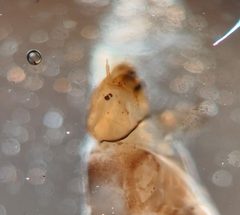
males possess distinctive genitalia structures used for identification, including characteristic anal point shapes and virga spine arrangements. The inferior volsella typically consists of two lobes with variable between species. Wing venation and body setation follow Orthocladiinae patterns.
Habitat
Riverine environments, particularly middle reaches of rivers with sand substrate. Some inhabit shallow water near shorelines. At least one species, H. lugubris, is adapted to temporary waters.
Distribution
Palaearctic region. Documented from Crimean Peninsula (Ukraine), Russian Far East, Japan (Kiso River), and northern Europe (Denmark, Norway, Sweden).
Life Cycle
At least one (H. kondoi) is with two per year, requiring approximately 841 to complete development. Second instar larvae of H. kondoi construct cocoons attached to sand grains for summer during high temperatures.
Behavior
Larvae of H. kondoi build protective cocoons for summer dormancy (), attaching these structures to sand grains in shallow near-shore water.
Ecological Role
Some function as nuisance in human-populated areas. Larval stages contribute to benthic in riverine .
Human Relevance
Hydrobaenus kondoi has been documented as a nuisance affecting human in Japan. emergences may cause annoyance in riverside .
Similar Taxa
- ParorthocladiusFormerly included H. korneyevi; distinguished by male genitalia characters including tergite IX with crest and gonostylus
- Other Orthocladiinae generaDifferentiated by combination of anal point , virga spine structure, and inferior volsella lobe configuration
More Details
Taxonomic history
Hydrobaenus korneyevi was transferred from Parorthocladius to Hydrobaenus based on morphological analysis of male characters.
Molecular identification
using COI sequences successfully distinguishes Hydrobaenus , with intraspecific variation of 0–3.5% and interspecific distances of 10.3–14.3%.
Sources and further reading
- BugGuide
- GBIF taxonomy match
- iNaturalist taxon
- NCBI Taxonomy
- Catalogue of Life
- Taxonomic notes on the genus Hydrobaenus with description of H. simferopolus sp. nov. from Crimea (Diptera: Chironomidae)
- Life cycle of Hydrobaenus kondoi S�ther (Chironomidae) at the middle reaches of the Kiso River, Japan
- Morphological description and DNA barcoding of Hydrobaenus golovinensis sp. nov. (Diptera: Chironomidae: Orthocladiinae) from the Russian Far East
- The life cycle of Hydrobaenus lugubris Fries, 1830, a chironomid (Diptera) species dwelling in temporary waters
- 218 Life history characteristics of two species of Hydrobaenus (Diptera : Chironomidae) in the middle reaches of the Kiso River