
Corynoneura
Winnertz, 1846
non-biting midges
Species Guides
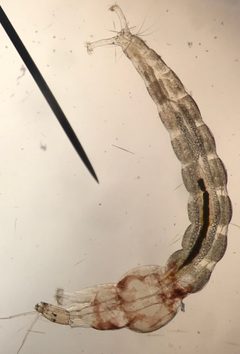
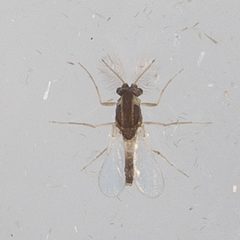
1Corynoneura is a speciose of small, non-biting midges in the Chironomidae. Members occur worldwide except Antarctica, inhabiting both flowing and standing freshwater across various thermal regimes. The genus has been subject to extensive taxonomic revision, with numerous described from the Neotropical region and Oriental China in recent decades. studies support the use of molecular data for species delimitation where alone is insufficient.
Pronunciation
How to pronounce Corynoneura: //ˌkɔːrɪnoʊˈnjʊərə//
These audio files are automatically generated. While they are not always 100% accurate, they are a good starting point.
Identification
Identification relies heavily on morphological examination of , particularly males, with pupal characteristics also used for delimitation. of the COI gene has proven effective for resolving taxonomic conflicts and revealing cryptic species. Keys to species are available for specific regions including the Neotropics and Oriental China.
Images
Habitat
Freshwater environments including both lotic (flowing) and lentic (standing) waters. occupy various thermal regimes. Some species, such as C. scutellata, have been documented in potable water distribution networks and water-treatment facilities.
Distribution
Worldwide distribution, absent from Antarctica. Documented from the Palearctic (including Scandinavia and Denmark), Neotropical region (Brazil, Chile, Rica, Mexico), and Oriental China. Distribution records extend to Colombia (Cundinamarca).
Life Cycle
Complete with four stages: , larva, pupa, and . Developmental thresholds and requirements have been quantified for C. scutellata: developmental threshold of 8.7°C and 172.4 day-degrees per . Some are multivoltine; C. scutellata has a theoretical maximum of seven generations per year. Multiple life stages (male, female, pupa, larva) have been described together for several species, facilitating identification across developmental phases.
Ecological Role
Larvae are aquatic and likely contribute to nutrient cycling and organic matter processing in freshwater . Specific ecological functions remain poorly documented for most .
Human Relevance
Corynoneura scutellata and related can infest potable water distribution networks and water-treatment works, where they may be managed as nuisance organisms. Developmental rate studies have been conducted to inform management strategies for in water treatment facilities.
Sources and further reading
- BugGuide
- Wikipedia
- GBIF taxonomy match
- iNaturalist taxon
- NCBI Taxonomy
- Catalogue of Life
- A review of the genus Corynoneura Winnertz (Diptera: Chironomidae) from the Neotropical region
- A New Species of Corynoneura Winnertz from Oriental China (Diptera: Chironomidae: Orthocladiinae)
- Integrating DNA barcodes and morphology for species delimitation in theCorynoneuragroup (Diptera: Chironomidae: Orthocladiinae)
- Developmental thresholds and day‐degree requirements of Paratanytarsus grimmii and Corynoneura scutellata (Diptera: Chironomidae): two midges associated with potable water treatment