
Tanytarsini
Genus Guides
4- Cladotanytarsus
- Micropsectra(non-biting midges)
- Rheotanytarsus
- Tanytarsus(non-biting midge)
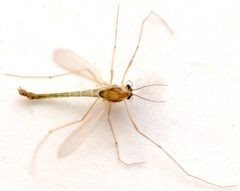
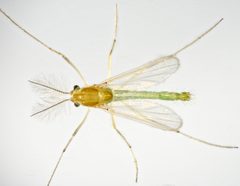
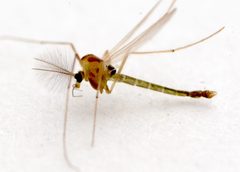
Tanytarsini is a diverse tribe of non-biting midges (Chironomidae: Chironominae) comprising over 20 and approximately 1,000 described . The tribe is divided into two subtribes: Tanytarsina and Zavreliina. Members occupy a wide range of aquatic including freshwater lotic and lentic systems, hygropetric seepages, and marine intertidal zones. The genus Pontomyia represents truly marine chironomids within this tribe, with specialized adaptations including flightless, females and short-lived non-feeding .
Pronunciation
How to pronounce Tanytarsini: /ˌtænɪˈtɑːrsɪnaɪ/
These audio files are automatically generated. While they are not always 100% accurate, they are a good starting point.
Identification
Tanytarsini can be distinguished from other Chironomidae tribes by combinations of and larval morphological characters, including specific arrangements of setae on the wing and particular configurations of the hypopygium in males. The subtribes Tanytarsina and Zavreliina are distinguished by morphological characters that have been corroborated by molecular phylogenetic analysis using COII gene sequences. -level identification often requires examination of male genitalia and pupal ; some species groups contain morphologically similar species that are taxonomically difficult to separate.
Images
Habitat
span freshwater streams, rivers, lakes, and to hygropetric seepages across rock surfaces and marine intertidal zones. Some occupy specialized microhabitats: Neozavrelia larvae and pupae form tough silk tubes within sandgrain cases in hygropetric zones; Pontomyia occurs in marine coastal environments from shallow waters to depths exceeding 30 m, associated with green , coral reefs, sand, and sediment. Madicolous (thin water film) habitats on rock surfaces in tropical regions also support diverse Tanytarsini .
Distribution
Worldwide distribution encompassing all biogeographic regions. Documented from the Holarctic, Neotropical (Amazon basin, Brazil, Ecuador), Australasian (Australia, including Tasmania), Indo-Pacific (Samoa, Marshall Islands, Taiwan, Japan, Singapore, Palau, Great Barrier Reef), and Atlantic regions (Belize, Puerto Rico, Florida, Brazil). Australian fauna includes 46 in six , with 33 species described as new in regional revisions. The genus Pontomyia has been recorded from both Pacific and Atlantic Oceans, with first South Atlantic record from Atol das Rocas, Brazil.
Host Associations
- green algae - associationlarvae associated with in marine environments (Pontomyia)
- coral reefs - associationmarine intertidal and shallow subtidal zones
- sea turtles (Eretmochelys imbricata) - potential mechanismpotential long-range via epibiontic association with filamentous covering turtles; suggested for Pontomyia
Life Cycle
includes , larva, pupa, and stages. Larval development period varies by : approximately 30 days in Pontomyia. Some adults are extremely short-lived; Pontomyia adults live only one to two hours and do not feed. Females of some marine genera are , , lacking and forelegs, with atrophied mid- and hindlegs incapable of movement. Larvae of some genera construct protective cases: Neozavrelia forms tough silk tubes within sandgrain cases; other occupy silk-lined tubes in madicolous .
Behavior
Males of some marine (Pontomyia) do not fly but are highly active, skating on the water surface to search for females. Limited capabilities in some lineages; potential long-range dispersal may occur via on sea turtles. of many species are attracted to light. Some species groups show specific fidelity, such as hygropetric zone .
Ecological Role
Components of freshwater and marine benthic ; part of the -rich that contribute to aquatic . Some species serve as bioindicators for water quality assessment. The tribe represents a significant component of madicolous and hygropetric entomofauna in tropical and temperate regions. Marine representatives (Pontomyia) contribute to intertidal and shallow marine food webs.
Human Relevance
Some have been evaluated for use as bioindicators in water quality monitoring programs. The tribe includes species recorded from drinking water (e.g., Cladotanytarsus molestus from Lake Straszyńskie, Poland). may occur as nuisance near aquatic , though as non-biting midges they do not pose medical or veterinary threats.
Similar Taxa
- ChironominiAnother tribe within Chironominae; distinguished by different combinations of wing setation, male hypopygial structure, and larval morphological characters
- PseudochironominiTribe within Chironominae; Tanytarsini distinguished by specific features of the pupal respiratory organ and thoracic structure
More Details
Molecular Systematics
Phylogenetic relationships within Tanytarsini have been investigated using mitochondrial COII gene sequences. Some Tanytarsini exhibit unusually long between COII and flanking tRNAs, with length variation associated with hypervariable regions including internal indels. Bayesian and maximum analyses generally support the monophyly of examined and the division into subtribes Tanytarsina and Zavreliina, though support for some intergeneric relationships remains weak.
Taxonomic Complexity
The tribe contains numerous groups with morphologically similar species that are difficult to distinguish. The Caladomyia, for example, contains 18 Amazonian species divided into two species-groups (spixi-group and orellanai-group), with some species nearly identical in external . Minuteness of many species compounds identification challenges.
Gondwanan Biogeography
The Nandeva exhibits a 'pseudo-gondwanan' distribution pattern: extant restricted austral range with fossil evidence of wider past distribution in northern regions. This pattern has been discussed in relation to historical tempo of diversification and dating of pertinent phylogenetic nodes within Tanytarsini.
Sources and further reading
- BugGuide
- Wikipedia
- iNaturalist taxon
- NCBI Taxonomy
- Catalogue of Life
- The Tanytarsini (Diptera : Chironomidae) of Australia
- Exploring Tanytarsini relationships (Diptera: Chironomidae) using mitochondrial COII gene sequences
- First recorded of Pontomyia Edwards, 1926 (Diptera: Chironomidae: Tanytarsini) in Brazil
- The Australian species of Neozavrelia Goetghebuer (Diptera: Chironomidae: Tanytarsini)
- The Australian species of Neozavrelia Goetghebuer (Diptera: Chironomidae: Tanytarsini)
- A systematic review of the genus Parapsectra Reiss (Diptera: Chironomidae: Tanytarsini) with description of a new species from Poland
- A contribution to the systematics of Neotropical Tanytarsus van der Wulp: first descriptions from Ecuador (Diptera: Chironomidae: Tanytarsini)
- Tanytarsini (Diptera: Chironomidae) from madicolous habitat in Southeast Brazil: new species and new records
- Six unusual Cladotanytarsus Kieffer: towards a systematics of the genus and resurrection of Lenziella Kieffer (Diptera: Chironomidae: Tanytarsini)
- Description of the pupa of Tanytarsus alatus Paggi (1992) (Chironominae: Tanytarsini)
- Amazonian Tanytarsini II. Description of Caladomyia n.gen. and eight new species (Diptera: Chironomidae)
- Cladotanytarsus molestus Hirvenoja, 1962 in Poland: toward the identification of bioindicative Tanytarsini (Diptera: Chironomidae)
- An enigmatic Chironomidae (Diptera): first larval description for Nandeva Wiedenbrug, Reiss and Fittkau and evidence for phylogenetic position in Tanytarsini
- The cururui-group of the genus Stempellina Thienemann & Bause. Amazonian Tanytarsini II. (Diptera: Chironomidae)