
Goeldichironomus
Fittkau, 1965
Species Guides
1Goeldichironomus is a of non-biting midges in the Chironomidae, containing approximately 14 described . The genus is distributed across the Neotropical and Nearctic regions, with records from Argentina, Brazil, and Colombia. Species in this genus are notable for their short , to environmental stress, and of ephemeral aquatic as pioneer species. They serve as important bioindicators in water quality assessments and are widely used in laboratory studies. The type species Goeldichironomus holoprasinus has been extensively studied in laboratory conditions, completing development from to in approximately 13 days at 26°C.
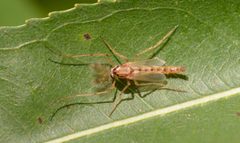
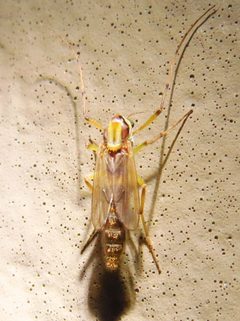
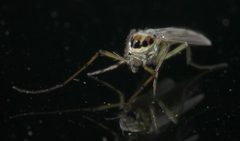
Pronunciation
How to pronounce Goeldichironomus: /ɡoʊlˌdɪkɪˈrɒnəməs/
These audio files are automatically generated. While they are not always 100% accurate, they are a good starting point.
Identification
within Goeldichironomus can be distinguished by mandibular : the fourth inner tooth is a diagnostic feature. Larval abdominal tubules appear beginning in the second instar, with the pair bifurcating in the third instar. Cephalic capsule growth follows with an average inter-instar growth ratio of 1.64.
Images
Habitat
Freshwater lentic and lotic systems, including urban environments, bottom sediments, and vegetated areas. Occupies phytotelmata, man-made water bodies, and naturally ephemeral . Often found in organically enriched conditions.
Distribution
Neotropical and Nearctic regions. Documented from Argentina (Santa Fe province), Brazil, and Colombia (Magdalena).
Diet
Larvae feed on organic matter and detritus in natural systems. Laboratory-reared individuals accept finely ground fish food suspension. do not feed.
Life Cycle
Short with rapid development. hatch in approximately 36 hours (range 24 hours–3 days, mean 2.3 days). Four larval instars: I (2.5 days), II (3.0 days), III (3.5 days), IV (6.5 days). Pupal and imaginal stages follow. D value (oviposition to first ) averages 13 days. Minimum G value (oviposition to first progeny of next ) is 16 days; average G value is 18 days with emergence lasting 4 days. Multiple generations possible annually under favorable conditions.
Behavior
Colonizes ephemeral as a pioneer . Exhibits synchronized that reduces overall development time and emergence period. Tolerates stressing environmental factors. Prioritizes rapid development over maximizing resource exploitation.
Ecological Role
Important component of aquatic due to high densities. Transfers organic matter and energy to aquatic and aquatic-terrestrial food webs. Widely used as a bioindicator in water quality assessments and biomonitoring studies. Employed in laboratory testing.
Human Relevance
Used extensively in water quality biomonitoring and laboratory assays. Serves as a model organism for studying dynamics in Chironomidae.
Similar Taxa
- ChironomusSympatric and congeneric in use; distinguished by mandibular tooth structure and larval tubule development patterns.
- Goeldichironomus maculatusCongeneric with overlapping distribution; G. holoprasinus distinguished by specific mandibular and timing.
- Goeldichironomus luridusCongeneric ; comparative studies show differences in development rates and morphological features.