
Axarus festivus
(Say, 1823)
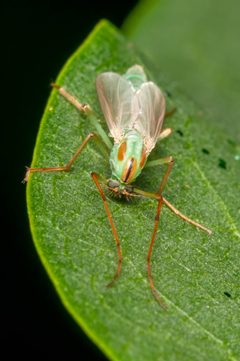
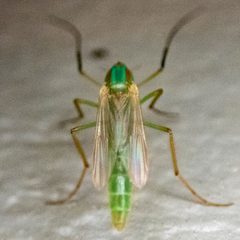
Axarus festivus is a of non-biting midge in the Chironomidae, originally described by Thomas Say in 1823. The species belongs to a of found in aquatic and semi-aquatic environments. As a member of the tribe Chironomini, it is part of a diverse group of insects whose larvae are predominantly aquatic and play significant roles in freshwater . The specific epithet 'festivus' refers to its festive or colorful appearance, a trait common in many Chironomidae species.

Pronunciation
How to pronounce Axarus festivus: /ˈaksarus fɛsˈtiːvus/
These audio files are automatically generated. While they are not always 100% accurate, they are a good starting point.
Identification
Identification to level in the Axarus requires examination of male genitalia and larval mouthpart structures. Axarus festivus can be distinguished from by specific arrangements of setae and hypopygial structure in males, and by the of the and in larvae. Accurate identification typically requires reference to specialized taxonomic keys for Nearctic Chironomidae.
Images
Habitat
Larvae inhabit freshwater aquatic environments including streams, rivers, and lakes. Specific microhabitat preferences within these systems have not been documented for this .
Distribution
Native to North America. The original description by Thomas Say (1823) was based on specimens from the United States. Precise range boundaries are not well documented.
Diet
Larvae are collector-gatherers or collector-filterers, feeding on particulate organic matter and microorganisms in aquatic sediments. Specific dietary items for this have not been documented.
Life Cycle
As with other Chironomidae, development includes , four larval instars, pupa, and stages. Larval development occurs in aquatic . Detailed duration and for this are not documented.
Behavior
form mating swarms, a characteristic of Chironomidae. Swarming typically occurs near larval in the evening. Specific swarming patterns for this are not documented.
Ecological Role
Larvae contribute to nutrient cycling in freshwater through processing of organic detritus. As prey for fish and other aquatic , they serve as a link between and higher .
Human Relevance
Like many Chironomidae, may form nuisance near water bodies, though this is not specifically documented as a pest. Larvae are used as bioindicators of water quality in some biomonitoring programs.
Similar Taxa
- Other Axarus speciesCongeneric share general and requirements; accurate separation requires examination of male genitalia or larval mouthparts.
- Other Chironomini generaTribe members share aquatic larval habits and general form; -level identification relies on antennal structure in males and larval capsule .
More Details
Taxonomic history
Originally described as Chironomus festivus by Thomas Say in 1823, later transferred to Axarus. The genus Axarus was established by Townes in 1945.
Nomenclature note
The specific epithet 'festivus' (Latin for festive, joyous, or colorful) was likely chosen to describe the appearance of the .