
Thaumatomyia rubida
(Coquillett, 1898)
grass fly
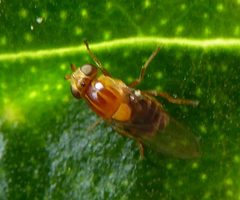
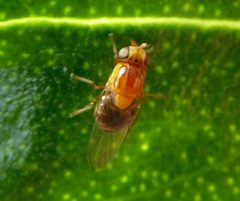
Thaumatomyia rubida is a small grass fly in the Chloropidae, first described by Coquillett in 1898. The is known from California and is characterized by its yellow-orange coloration and diminutive size of 2-3 millimeters. As a member of the grass fly group, it belongs to a family commonly associated with grassland and agricultural .
Pronunciation
How to pronounce Thaumatomyia rubida: /θɔːˌmætəˈmaɪə ˈruːbɪdə/
These audio files are automatically generated. While they are not always 100% accurate, they are a good starting point.
Identification
The small size (2-3 mm) combined with yellow-orange coloration distinguishes this from many other small flies. Definitive identification requires examination of microscopic morphological features, particularly of the male genitalia and wing venation patterns. The species can be separated from other Thaumatomyia species by specific characters of the , , and terminalia as described in original taxonomic works.
Images
Appearance
measure 2-3 millimeters in body length. The body is yellow to orange in coloration. As a chloropid fly, it possesses the typical dipteran features of one pair of functional wings with the hindwings reduced to small knob-like for balance. The body is compact with relatively short characteristic of the .
Habitat
Specific details for this are not documented in available sources. Members of the Thaumatomyia are generally associated with grassland environments, meadows, and agricultural areas where larval development occurs in association with grasses or soil.
Distribution
Known to occur in California, United States. The precise range within California and potential occurrence in adjacent regions has not been comprehensively documented.
Ecological Role
Human Relevance
No documented direct economic or medical significance. The is not known to be a pest of crops or a of . Its small size and limited distribution suggest minimal interaction with human activities.
Similar Taxa
- Other Thaumatomyia speciesCongeneric share similar small size, coloration, and general body plan. Microscopic examination of genitalia and specific setal patterns required for separation.
- Other ChloropidaeMany chloropid flies are small, yellowish, and occur in similar . -level characters include reduced wing venation with anal absent or reduced, and specific antennal structure.
More Details
Taxonomic history
Described by Daniel William Coquillett in 1898, a prominent American dipterist who described numerous North American fly .
Research status
This appears to be poorly studied beyond original description and basic faunistic records. No specialized ecological or behavioral studies have been published.