
Proceroplatus
Edwards, 1925
Species Guides
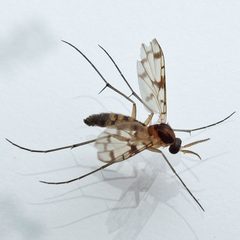
1Proceroplatus is a of keroplatid fungus gnats comprising 39 described extant plus two fossil species. are distinguished by wings with diverse color patterns, except in P. kerteszi which has unpatterned wings. The genus has a worldwide pantropical distribution, with the highest in the Neotropical Region. Larvae exhibit diverse ecological strategies, including in association with -plants and causing root damage to orchids.
Pronunciation
How to pronounce Proceroplatus: /proʊˌsɛroʊˈpleɪtəs/
These audio files are automatically generated. While they are not always 100% accurate, they are a good starting point.
Identification
Distinguished from other keroplatid by the combination of wing pattern diversity and . Molecular identification can be confirmed using the mitochondrial COI gene. The two Chinese P. dapanshanus and P. biemarginatus are distinguished by specific morphological characters detailed in species-level descriptions.
Images
Habitat
Found in mountainous national nature reserves at elevations ranging from 56 m to 1,520 m. Specific collection sites include Dapanshan (1,245 m), Longwangshan (671 m), Tianmushan (361 m), Mt. Dinghu (56 m), Mt. Wugui (114 m), Dayaoshan (1,520 m), and Huaping (750 m).
Distribution
Worldwide across all zoogeographical regions except Antarctica, with a primarily pantropical distribution. : Neotropical (26 ), Afrotropical (8), Australasian (5), Oriental (4), Nearctic (3), Palaearctic (1). First recorded in China from southern provinces (Zhejiang, Guangdong, Guangxi, Guizhou).
Host Associations
- ant-plants - for larval
- Dutch orchids - pestphytophagous larvae cause root damage
- flowers - visitation of undescribed species are flower visitors
Life Cycle
Larvae exhibit diverse : some are , others are phytophagous.
Behavior
Larvae show diverse ecological strategies including associated with -plants and damaging orchid roots. of some undescribed species are flower visitors.
Human Relevance
Some are minor pests of cultivated orchids due to larval root feeding.
More Details
Mitogenomics
The complete mitogenome of P. dapanshanus has been assembled and annotated, representing the first mitogenome for the . Comparative analyses indicate that keroplatid mitogenomic evolution is relatively conserved and influenced by mutation pressure, , and other factors.
Species discovery
Two new were described from China in 2025: P. dapanshanus and P. biemarginatus, marking the first records of the in that country.