
Vitisiella brevicauda
(Felt, 1908)
Grape Tumid Gallmaker Midge
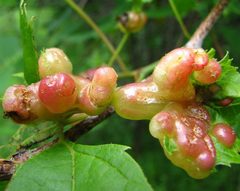
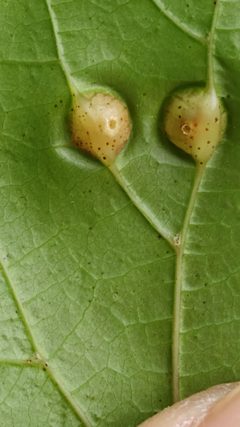
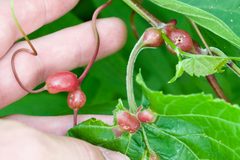
Vitisiella brevicauda, the Grape Tumid Gallmaker , is a gall midge in the Cecidomyiidae that induces characteristic tumor-like galls on grape (Vitis) leaves and stems. The was described by Felt in 1908 and is primarily known from eastern North America. It is a minor pest in vineyards, where gall formation can reduce photosynthetic capacity and aesthetic value of grape foliage.
Pronunciation
How to pronounce Vitisiella brevicauda: /ˌvɪtɪˈsiːɛlə ˌbrɛvɪˈkaʊdə/
These audio files are automatically generated. While they are not always 100% accurate, they are a good starting point.
Identification
Distinguished from other Vitisiella by the short female ovipositor (caudal appendage). The galls themselves are diagnostic: irregular, fleshy, tumor-like swellings on grape leaves and petioles, green to reddish in color, often clustered. require microscopic examination for definitive identification; with 12 flagellomeres in females, 14 in males, with distinct circumfilar . Similar gall midges on Vitis include species of Dasineura and Lasioptera, which produce different gall morphologies (leaf curl, erineum, or stem galls versus tumid galls).
Images
Appearance
are small, delicate typical of Cecidomyiidae: body length approximately 2–3 mm, with long, slender legs and thread-like bearing of setae. Wings are clear with reduced venation, characteristic of gall midges. The specific epithet "brevicauda" refers to the relatively short female ovipositor compared to . Larvae are small, legless, and maggot-like, developing within plant galls.
Habitat
Found in vineyards, riparian corridors, and woodland edges where wild and cultivated grapes (Vitis spp.) occur. Associated with mesic to submesic supporting robust grape growth. Not restricted to commercial agriculture; common in naturalized settings with native Vitis .
Distribution
Eastern North America, with records from Vermont and surrounding northeastern United States. Distribution corresponds broadly with range of native Vitis , though precise limits require further documentation.
Seasonality
emerge in spring to early summer, coinciding with grape shoot expansion and leaf development. Gall formation visible from late spring through summer. Larvae pupate within galls; likely , with as pupae in fallen leaves or soil.
Diet
Larvae feed on gall tissue induced on Vitis spp.; the feeding stimulates hyperplastic and hypertrophic plant growth forming the characteristic tumid galls. do not feed.
Host Associations
- Vitis - gall inductionPrimary ; specific Vitis not definitively documented in sources
Life Cycle
deposited on young grape leaves or stems. Larvae hatch and initiate gall formation, developing through three instars within the protective gall tissue. occurs within the gall or in soil after gall dehiscence. emerge to mate and oviposit on new season growth. stage presumed to be pupal, in plant debris or soil.
Behavior
Females oviposit into developing grape tissue, with chemical and mechanical stimuli inducing gall formation. Larvae are sedentary, feeding within the gall. are weak fliers, dispersing short distances to locate new plants. or activity patterns suspected but not documented.
Ecological Role
Acts as a phytophagous gall inducer, creating localized nutrient sinks that alter leaf architecture and photosynthetic . Galls may provide microhabitat for secondary inhabitants (, ), though specific associates not documented in available sources. Minor role in natural ; more significant in agricultural contexts.
Human Relevance
Minor economic pest in grape production, particularly in eastern North American vineyards. Gall formation reduces aesthetic quality of table grapes and may modestly impact in severe . Rarely requires targeted management; generally controlled through standard vineyard and pruning practices. No significant impact on wine grape quality documented.
Similar Taxa
- Dasineura vitisAlso induces galls on grape, but produces leaf curl or shoot deformation rather than discrete tumid galls
- Lasioptera vitisForms stem galls or shoot swellings, distinct from the leaf and petiole tumid galls of V. brevicauda
- Vitisiella species (other)Distinguished by ovipositor length and subtle antennal and genitalic characters requiring microscopic examination
More Details
Taxonomic History
Originally described by Ephraim Porter Felt in 1908, a prolific North American dipterist who described hundreds of Cecidomyiidae . The Vitisiella was erected to accommodate grape-feeding gall midges distinct from the broader genus Cecidomyia. Type material presumably deposited in the Felt collection, now part of the New York State Museum holdings.
Research Needs
Detailed studies, range specificity, and natural enemy complexes remain poorly documented. Economic impact assessments in modern viticulture are lacking; most information derives from early 20th century descriptive work.