
Dasineura investita
Plakidas, 2016
Wood Nettle Gall Midge
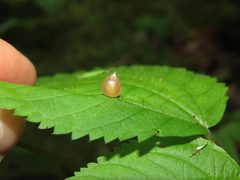
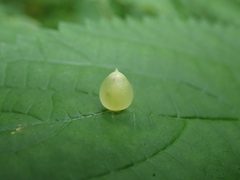
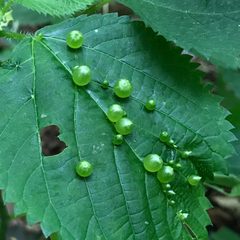
Dasineura investita is a gall midge in the Cecidomyiidae that induces distinctive galls on wood nettle (Laportea canadensis). First described in 2016, this produces oval to globose galls measuring 4–5 mm by 8–12 mm on various plant parts including petioles, leaves, leaf midribs, leaf , flowers, and stems. The galls exhibit variable coloration ranging from pale and white to red and green translucent. The species has two annually, with autumn-generation larvae inside the gall's central chamber.
Pronunciation
How to pronounce Dasineura investita: //ˌdæsɪˈnjʊərə ˌɪnˈvɛstɪtə//
These audio files are automatically generated. While they are not always 100% accurate, they are a good starting point.
Identification
Identified by the presence of its characteristic galls on Laportea canadensis. The galls are distinguished by their oval-globose shape, variable coloration (pale, white, red, to green translucent), and occurrence on multiple plant parts (petioles, leaf blades, midribs, , flowers, and stems). Dissection reveals a larval inhabitant in a central chamber. The can be separated from other Dasineura gall midges by specificity to Laportea canadensis and the described gall .
Images
Appearance
are tiny flies typical of gall midges, though specific adult is not well documented. The induced galls are the most visible sign of this : oval to globose structures measuring 4–5 mm in width by 8–12 mm in length. Gall coloration varies from pale and white to red and green translucent. Internally, galls contain a central chamber housing the developing larva.
Habitat
Associated with mesic forest where the plant Laportea canadensis (wood nettle) occurs. Observed in mesic bluff base forests and riparian corridors. The host plant typically grows in moist, shaded woodland understories.
Distribution
Documented from southern Illinois (LaRue-Pine Hills/Otter Pond Research Natural Area) and presumably throughout the range of its plant Laportea canadensis in eastern North America. The host plant ranges across eastern Canada and the eastern United States.
Seasonality
Two per year. Autumn-generation larvae overwinter in the central chamber of the gall and presumably emerge as the following spring. Active gall formation and larval development occurs during the growing season.
Diet
Larval development occurs within plant tissue of Laportea canadensis; specific feeding habits unknown.
Host Associations
- Laportea canadensis - plantinduces galls on petioles, leaves, midribs, , flowers, and stems
Life Cycle
(two annually). Full-grown larvae from the autumn generation overwinter inside the central chamber of the gall. and presumably occur in spring, followed by gall induction on new plant growth. A second generation develops during summer.
Behavior
Induces gall formation on plant tissue. Larvae develop within the protective gall structure. larvae remain in the gall chamber rather than exiting to the soil.
Ecological Role
Acts as a gall inducer, creating specialized plant structures that provide shelter and nutrition for its larvae. The ecological impact on plant has not been quantified. Serves as a food source for potential gall or , though specific associations are not documented.
Human Relevance
Of minor direct human significance. May be encountered by botanists and naturalists studying woodland flora. The galls are distinctive enough to be noticed by observant hikers in areas where the plant occurs. No economic importance to agriculture or forestry is known.
Similar Taxa
- Other Dasineura speciesDasineura is a large with many gall-forming , but they differ in plant specificity and gall ; D. investita is distinguished by its association with Laportea canadensis and the described gall characteristics.
- Other Cecidomyiidae gall midges on UrticaceaeOther gall midges may occur on nettle plants, but D. investita is specifically associated with Laportea canadensis and produces galls of the described size, shape, and coloration.
More Details
Taxonomic history
Described in 2016 by Plakidas, making it a relatively recently recognized . The specific epithet 'investita' refers to the covering or investment of the larva within the gall.
Gall location variability
Unlike some gall midges that induce galls on specific plant parts, D. investita shows flexibility in gall location, forming galls on petioles, upper leaf surfaces, leaf midribs, leaf , between leaf veins, flowers, and stems.