
Craneiobia
Kieffer, 1913
Species Guides
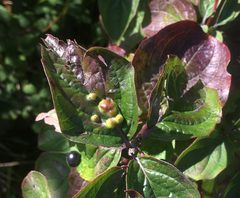
1Craneiobia is a of gall midges in the Cecidomyiidae, established by Kieffer in 1913. The genus contains at least two described that induce distinctive tube-like galls on leaves of Cornus (dogwood) plants. These insects are specialized gall-formers with a narrow association.
Pronunciation
How to pronounce Craneiobia: /kɹæˌnɪˈoʊbiə/
These audio files are automatically generated. While they are not always 100% accurate, they are a good starting point.
Identification
Members of this can be recognized by their association with Cornus plants bearing tube-shaped leaf galls. are minute flies typical of Cecidomyiidae, with reduced wing venation and long, bead-like . -level identification requires examination of larval gall or adult genitalia.
Images
Habitat
Occurs in supporting Cornus , including forests, woodlands, and ornamental plantings where dogwoods are present.
Distribution
Recorded from Denmark, Norway, and Sweden; likely more widespread in regions where Cornus occur.
Diet
Larvae feed within galls induced on Cornus leaves; specific feeding mechanism within gall tissue is unknown.
Host Associations
- Cornus - planttube-like leaf galls
Life Cycle
Induces galls on leaves; presumably has complete with , larval, pupal, and stages typical of Cecidomyiidae, though specific details are unreported.
Behavior
Induces tube-like galls on leaves; larval development occurs within these structures.
Ecological Role
Gall inducer; creates specialized microhabitats on Cornus leaves that may support associated and .
Human Relevance
Minor significance; may occasionally affect ornamental dogwoods but is not considered a major pest.
Similar Taxa
- Other Cecidomyiidae gall midges on CornusMultiple cecidomyiid induce galls on dogwoods; Craneiobia is distinguished by its characteristic tube-shaped leaf galls.
- AsphondyliaSome produce similar tubular galls; separation requires association and gall details.
More Details
Species composition
Two described : C. corni (Giraud, 1863) and C. tuba (Stebbins, 1910)