
Neolasioptera perfoliata
(Felt, 1907)
Boneset Stem Midge
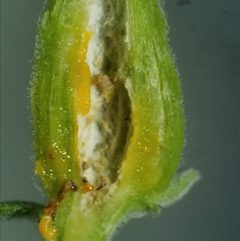
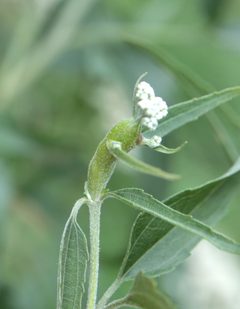
Neolasioptera perfoliata is a gall midge in the Cecidomyiidae. The "Boneset Stem " indicates its association with boneset plants (Eupatorium ). As a gall midge, it induces gall formation on plants during its larval development. The species was described by Felt in 1907.
Pronunciation
How to pronounce Neolasioptera perfoliata: /niː.əʊˌlæsiˈɒptərə ˌpɜːr.fəʊliˈeɪtə/
These audio files are automatically generated. While they are not always 100% accurate, they are a good starting point.
Identification
The specific epithet "perfoliata" and "Boneset Stem " suggest association with perfoliate-leaved boneset . Gall midge identification generally requires examination of larval , genitalia, or the specific gall structure induced on plants. Distinctive gall morphology on Eupatorium stems may aid field identification.
Images
Distribution
Recorded from Vermont and other parts of the United States. Distribution appears centered in eastern North America, consistent with the range of its likely plants in the Eupatorium.
Diet
Larvae feed internally within plant tissue, inducing gall formation on boneset (Eupatorium) stems. Specific feeding mechanisms and plant parts consumed have not been detailed in available sources.
Host Associations
- Eupatorium - inferred from "Boneset Stem "; specific not confirmed
Ecological Role
As a gall-former, modifies plant growth and creates for associated organisms. Gall midges can influence plant resource allocation and may serve as food sources for and other insect .
Similar Taxa
- Other Neolasioptera speciesSame ; likely similar and ; differentiation requires examination of genitalia or larval characters
- Other Cecidomyiidae on EupatoriumMay induce similar stem galls; identification requires association with specific gall and plant
More Details
Taxonomic note
The specific epithet "perfoliata" refers to perfoliate leaves, a characteristic of some Eupatorium , suggesting the original description may have noted this plant feature.