
Asteromyia tumifica
(Beutenmüller, 1907)
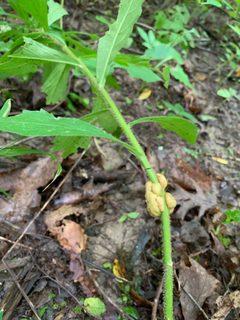
Asteromyia tumifica is a gall midge in the Cecidomyiidae that induces blister galls on goldenrod stems. The maintains a distinctive symbiotic relationship with fungi, which are transported by females in the ovipositor and transferred during -laying. These fungi form a black, hardened protective cast around mature larvae within the gall.
Pronunciation
How to pronounce Asteromyia tumifica: /ˌæstəˈroʊmiə tjuːˈmɪfɪkə/
These audio files are automatically generated. While they are not always 100% accurate, they are a good starting point.
Identification
Blister galls appear as swellings on green stems at the base of goldenrod plants. Mature galls contain a black, hard fungal cast surrounding the larva—a feature unique to this among Asteromyia. The gall structure and fungal association distinguish it from other goldenrod gall midges.
Images
Habitat
Associated with goldenrod (Solidago) plants in open, herbaceous environments where goldenrod grows.
Distribution
Recorded from Vermont and other parts of the United States.
Host Associations
- Solidago - obligateInduces blister galls on green stems at base of plants
Behavior
Females transport fungal internally in the ovipositor and inoculate stems with fungal spores simultaneously with insertion.
Ecological Role
Acts as a gall inducer on goldenrod; the fungal provides protective structure for larval development.
Similar Taxa
- Other Asteromyia speciesA. tumifica is distinguished by its blister gall on stems (versus leaf or other tissue galls) and the presence of the black fungal cast around larvae.
More Details
Fungal symbiosis
The was among the first documented cases of insect-fungus mutualism in gall midges. The fungal partner forms a hardened, melanized structure that protects the larva from desiccation and possibly .