
Monarthropalpus
Rübsaamen, 1892
boxwood leafminer gall midge
Species Guides
1- Monarthropalpus flavus(boxwood leafminer)
Monarthropalpus is a of gall midges in the Cecidomyiidae. The genus contains at least one described , M. flavus, commonly known as the boxwood leafminer. These small flies are native to Europe and were introduced to North America, where they have become significant pests of boxwood (Buxus spp.) ornamental plants. The larvae develop as leafminers within boxwood leaves, causing characteristic yellow-orange discoloration, blistering, and gall formation that disfigures foliage.
Pronunciation
How to pronounce Monarthropalpus: /mɔˌnar.θroʊˈpæl.pəs/
These audio files are automatically generated. While they are not always 100% accurate, they are a good starting point.
Identification
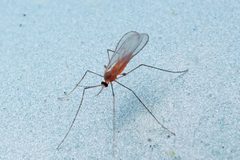
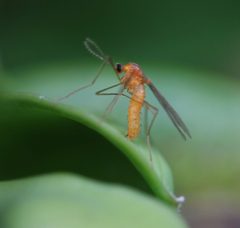
are delicate, gnat-like orange flies resembling small mosquitoes. Larvae are tiny yellow to orange maggots found feeding between the upper and lower leaf surfaces of boxwood leaves. Infested leaves develop distinctive yellow-orange mottling, bumps, and blister-like galls. Papery pupal skins () may protrude from the lower leaf surface after adult . The is distinguished from other gall midges by its specific association with Buxus plants and the characteristic leafmining habit with gall formation.
Images
Habitat
Landscape and ornamental plantings of boxwood (Buxus spp.), particularly in managed gardens, hedges, and cultivated shrubbery. Associated with human-maintained environments where boxwood varieties are grown as decorative evergreens.
Distribution
Native to Europe, now established across the United States and parts of North America. First detected in the United States in 1910. Present in at least 18 European countries. Distribution records from Denmark, Norway, and Sweden.
Seasonality
emerge in early spring, typically from early May through early June in temperate regions. occurs primarily in early morning hours between 04:00 and 08:00, with peak activity before 06:00. Larval development occurs through summer and autumn, with growth slowing during winter months and resuming in April.
Host Associations
- Buxus sempervirens - primary most commonly attacked
- Buxus spp. - other boxwood also susceptible
Life Cycle
Females use a drill-like ovipositor to puncture young boxwood leaves and deposit in leaf tissue. Larvae hatch and feed within leaves, inducing gall formation as plant tissue proliferates around developing maggots. Larvae overwinter in galled leaves, resuming growth in spring. Before , larvae move to the lower leaf surface and create an exit window by removing most tissue, leaving only a thin epidermal layer. Pupation occurs within the gall, and emerge by pushing through this window. Pupal remain protruding from leaves for several days after .
Behavior
is strongly influenced by light levels, with most activity occurring in early morning. Females exhibit a characteristic drilling when ovipositing, twisting and turning to insert through leaf surfaces. Larvae create precise exit windows before , demonstrating site-specific tissue removal behavior.
Ecological Role
Pest of ornamental landscape plants. Gall formation represents a plant- interaction where larval feeding induces abnormal plant growth. No known beneficial ecological functions.
Human Relevance
Significant pest of boxwood ornamentals in horticulture and landscaping. Causes aesthetic damage to hedges and decorative plantings valued since Roman times. Economic impact on nursery industry and garden maintenance. Management options include planting varieties such as Buxus sempervirens 'Vardar Valley' from Macedonia.
Similar Taxa
- other Cecidomyiidae gall midgesdistinguished by specific association with Buxus and characteristic leafmining with gall formation; most other gall midges attack different plant or produce different gall types
- Asphondylia ilicicola (holly berry midge)both are cecidomyiid pests of ornamental evergreens, but A. ilicicola attacks Ilex (holly) rather than Buxus, and affects berries rather than leaves
Sources and further reading
- BugGuide
- Wikipedia
- GBIF taxonomy match
- iNaturalist taxon
- NCBI Taxonomy
- Catalogue of Life
- A blue Christmas for boxwood: Boxwood leafminer, Monarthropalpus flavus — Bug of the Week
- Twisting the day away: Boxwood leafminer, Monarthropalpus flavus — Bug of the Week
- Boxwood blues - Boxwood leafminer, Monarthropalpus flavus — Bug of the Week
- Archive — Bug of the Week
- Boxwood Leafminer Monarthropalpus flavus (Schrank) (Insecta: Diptera: Cecidomyiidae)
- Biology, distribution and control of Monarthropalpus buxi (Laboulbène) (Diptera, Cecidomyiidae)
- Study Upon Life Cycle of Monarthropalpus buxi Geoff. on Cluj Climatic Conditions
- Female sex pheromone gland of the boxwood leafminer, Monarthropalpus buxi (Diptera: Cecidomyiidae): Morphological and behavioural evidence
- Notes on the Life History and the Control Methods of the Box Wood Leaf Midge, (Monarthropalpus buxi Labou.)1
- Structural Particularities of Gall Neoformations Induced by Monarthropalpus flavus in the Leaves of Buxus sempervirens.