
Contarinia verrucicola
(Osten Sacken, 1875)
Linden Wart Gall Midge
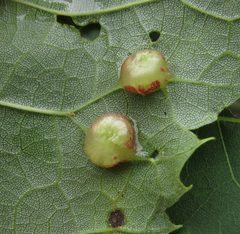
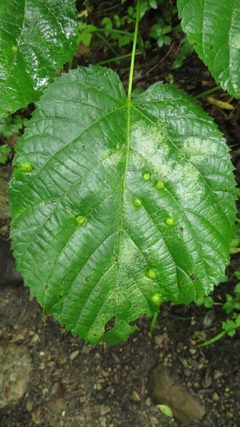
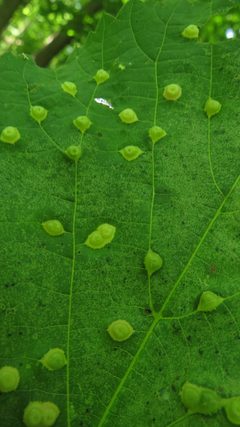
Contarinia verrucicola, commonly known as the linden wart gall midge, is a gall-forming in the Cecidomyiidae. The induces distinctive wart-like galls on linden trees (Tilia spp.). It was described by Osten Sacken in 1875. The species has been documented with over 1,700 observations on iNaturalist, indicating it is relatively common and well-recorded where its plants occur.
Pronunciation
How to pronounce Contarinia verrucicola: //kɔn.taˈrɪ.ni.a vɛr.rʊˈkɪ.kə.la//
These audio files are automatically generated. While they are not always 100% accurate, they are a good starting point.
Identification
The is identified by the presence of its characteristic wart-like galls on linden leaves. are small, delicate flies typical of the Cecidomyiidae, with reduced wing venation and long, bead-like . Specific diagnostic features for separating C. verrucicola from other Contarinia species require examination of adult or molecular analysis.
Images
Habitat
Associated with linden trees (Tilia spp.), occurring in urban plantings, parks, woodlands, and forest edges where trees are present.
Distribution
Documented from the United States, including Vermont. The ' distribution corresponds to the range of its linden trees in North America.
Host Associations
- Tilia - gall induction on leavesLinden trees; induces wart-like galls
Ecological Role
As a gall inducer, the manipulates plant tissue to form protective structures for larval development. The galls represent a form of plant-animal interaction that creates specialized microhabitats.
Human Relevance
The galls may be noticeable on ornamental linden trees in urban and landscape settings, but the is not considered a significant economic pest. The damage is primarily cosmetic and does not threaten tree health.
Similar Taxa
- Other Contarinia speciesMany Contarinia are gall midges on different plants; accurate identification requires host association and detailed morphological examination
- Other Cecidomyiidae on TiliaSeveral gall midge may occur on linden; C. verrucicola is distinguished by its specific wart gall
More Details
Taxonomic Note
The was originally described by Carl Robert Osten Sacken in 1875, a prominent dipterist who made significant contributions to the of North American flies.
Observation Frequency
With over 1,700 iNaturalist observations, this is among the more frequently documented gall midges, likely due to the conspicuous nature of its galls on commonly planted ornamental trees.
Sources and further reading
- BugGuide
- Wikipedia
- GBIF taxonomy match
- iNaturalist taxon
- Catalogue of Life
- Ian Grettenberger Targets a Variety of Pests | Bug Squad
- Bohart Museum Virtual Open House: Think Pests of Alfalfa and Rice | Bug Squad
- Insects that feed on developing grain in the head - AgriLife Extension Entomology
- Super Crop Challenge #13 | Beetles In The Bush