
Caryomyia subulata
Gagné, 2008
Hickory Awl-shaped Gall Midge
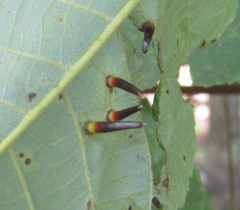
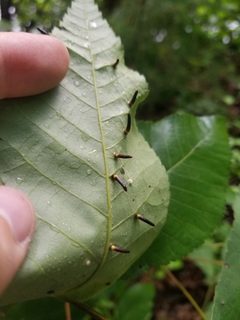
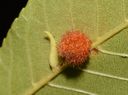
A of gall midge in the Cecidomyiidae, described by Gagné in 2008. Known by the "Hickory Awl-shaped Gall Midge," this species induces distinctive galls on hickory trees. As a member of the Caryomyia, it belongs to a group specialized on Carya (hickory) . The specific epithet "subulata" refers to the awl-shaped form of the gall it produces.
Pronunciation
How to pronounce Caryomyia subulata: //ˌkæɹi.oʊˈmaɪə ˌsʌbjʊˈleɪtə//
These audio files are automatically generated. While they are not always 100% accurate, they are a good starting point.
Images
Habitat
Associated with hickory trees (Carya spp.), as indicated by the name Caryomyia and . The specific requirements within hickory-dominated are not documented.
Distribution
Distribution not documented in available sources. The Caryomyia is primarily Nearctic in distribution.
Host Associations
- Carya - gall induction-level association inferred from genus name Caryomyia; specific for C. subulata not documented
Ecological Role
Induces galls on hickory trees, potentially affecting plant growth and serving as a food source for gall-associated and .
Human Relevance
The "Hickory Awl-shaped Gall Midge" suggests the galls may be noticeable to observers of hickory trees, though economic or horticultural significance is not documented.
Similar Taxa
- Other Caryomyia speciesCongeneric also induce galls on Carya; differentiation requires examination of gall and morphology
- Other gall midges on CaryaOther Cecidomyiidae may also form galls on hickory; Caryomyia is distinguished by specific morphological features of and gall structure