
Ozodiceromyia
Bigot, 1890
stiletto flies
Species Guides
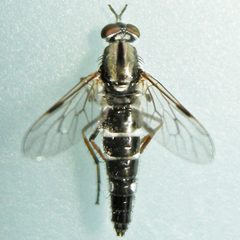
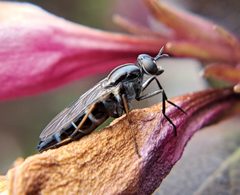
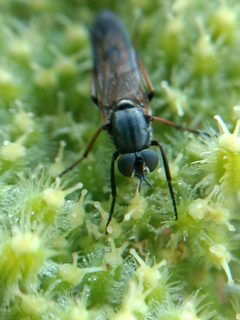
7Ozodiceromyia is a of stiletto flies ( Therevidae) comprising approximately seven described distributed across North America, Central America, and northern South America. The genus was established by Bigot in 1890 and belongs to the cycloteline of Therevidae. Species in this genus are part of the diverse of predatory flies within the stiletto fly family, though specific ecological details for most species remain poorly documented.
Pronunciation
How to pronounce Ozodiceromyia: /oʊˌzoʊdɪˈsɛrəˌmaɪə/
These audio files are automatically generated. While they are not always 100% accurate, they are a good starting point.
Identification
Ozodiceromyia can be distinguished from other cycloteline Therevidae by characteristics of the mexicana-group as defined by Gaimari and Irwin (2000), including specific features of the male terminalia and wing venation patterns. The genus is part of the cycloteline Therevinae, a group characterized by particular wing configurations and body proportions. Accurate -level identification requires examination of male genitalia and detailed morphological analysis.
Images
Distribution
North America, Central America, and northern South America.
Similar Taxa
- Other cycloteline Therevidae generaShare characteristics including wing venation patterns and body form; distinguished by specific male terminalia and other subtle morphological features detailed in Gaimari & Irwin (2000).
More Details
Taxonomic history
The was revised by Gaimari and Irwin in 2000, who provided a phylogenetic analysis and revision of the mexicana-group within Ozodiceromyia. The seven described are: O. argentata, O. flavipennis, O. levigata, O. nanella, O. nigrimana, O. notata, and O. signatipennis.
Research significance
As part of the Therevidae , Ozodiceromyia contributes to understanding the diversity and of cycloteline stiletto flies in the New World, though the has received limited focused study compared to some other Therevidae genera.