
Ectyphinae
Wilcox & Papavero, 1971
Genus Guides
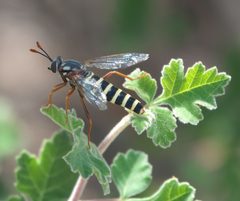
2Ectyphinae is a of mydas flies (Mydidae) containing at least four distributed across southern Africa and southwestern North America. The subfamily was established by Wilcox and Papavero in 1971. Members of this group are among the largest flies in their respective regions, though specific biological details remain poorly documented for most .
Pronunciation
How to pronounce Ectyphinae: //ɛkˈtɪfɪniː//
These audio files are automatically generated. While they are not always 100% accurate, they are a good starting point.
Identification
Ectyphinae can be distinguished from other mydas fly by genitalic and wing venation characters used in phylogenetic classification. The four constituent show disjunct geographic distributions: Ectyphus and Parectyphus occur in southern Africa, while Heteromydas and Opomydas are restricted to the southwestern United States and Mexico. No comprehensive field identification guide exists for distinguishing Ectyphinae from other Mydidae subfamilies based on external alone.
Images
Distribution
The has a disjunct distribution spanning two regions: southern Africa (Ectyphus in South Africa, Parectyphus in Namibia) and the southwestern United States and Mexico (Heteromydas and Opomydas).
Similar Taxa
More Details
Taxonomic note
Catalogue of Life lists Ectyphinae with rank '' and status 'synonym', but this appears to be a database error; authoritative sources (NCBI, iNaturalist, primary literature) consistently treat Ectyphinae as a valid within Mydidae.
Research status
Ectyphinae is one of the least studied groups within Mydidae. Most biological and ecological information is derived from the few well-known in Ectyphus; the North American Heteromydas and Opomydas are rarely encountered and poorly documented in studies.