
Geron
Meigen, 1820
Species Guides
2- Geron calvus(Bald Bee Fly)
- Geron vitripennis
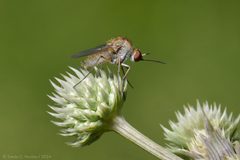
Geron is a of bee flies in the Bombyliidae, established by Meigen in 1820. These small to minute flies are characterized by their slender bodies, reduced wing venation, and often distinctive facial markings. Members of this genus are , with larvae developing in the sacs of spiders. The genus is placed in the Toxophorinae and tribe Gerontini. Geron are found across multiple continents including North America and Europe.
Pronunciation
How to pronounce Geron: /ˈɡeɪrɒn/
These audio files are automatically generated. While they are not always 100% accurate, they are a good starting point.
Identification
Geron can be distinguished from other Bombyliidae by the combination of small size, slender body form, and reduced wing venation. The facial markings, when present, are useful for -level identification. Distinguished from the similar genus Systoechus by wing venation details and body proportions. Identification to species often requires examination of genitalia and detailed facial pattern analysis.
Images
Appearance
Small to minute bee flies with slender, delicate bodies. often has distinctive facial markings or pollinose patterns. Wings typically with reduced venation compared to other bombyliids, often appearing relatively clear or lightly patterned. Body usually covered with fine setae. present but not exceptionally long. Legs relatively long and slender for the body size. Some exhibit in facial coloring.
Habitat
Found in diverse open including grasslands, meadows, forest edges, and sandy areas. Associated with habitats supporting spider , as larvae are of spider sacs. often observed on flowers or in in sunny conditions.
Distribution
Recorded from North America (including Vermont, USA) and Europe. Wider distribution likely but specific range details require further documentation.
Seasonality
activity period varies by and latitude; generally active during warmer months when spiders are reproductive.
Diet
feed on nectar from small flowers. Larvae are developing within spider sacs, consuming spider eggs and developing spiderlings.
Host Associations
- Spider egg sacs - Larvae develop as within spider sacs
Life Cycle
Holometabolous. laid on or near spider egg sacs. Larvae penetrate egg sacs and develop as , consuming spider eggs. occurs within the spider egg sac or in nearby soil. emerge to feed on nectar and mate.
Behavior
are rapid, agile fliers often seen hovering or darting between low flowers. Females locate spider sacs for oviposition, exhibiting searching in suitable . Adults may be observed basking on bare ground or vegetation.
Ecological Role
of spiders, potentially regulating spider in some . contribute to pollination of small-flowered plants through nectar feeding.
Human Relevance
Minimal direct economic importance. Occasionally studied in contexts regarding spider . Of interest to dipterists and natural historians.
Similar Taxa
- SystoechusSimilar small slender bee flies; distinguished by wing venation patterns and facial structure
- Other Toxophorinae generaShare characteristics but differ in body proportions, wing details, and facial markings
More Details
Taxonomic Note
The Geron is the type genus of the tribe Gerontini within Toxophorinae. The etymology derives from Greek 'geron' meaning 'old man', possibly referencing the facial markings resembling a beard in some .
Research Gaps
Specific spider associations, detailed , and complete geographic distribution remain incompletely documented for most .
Sources and further reading
- BugGuide
- Wikipedia
- GBIF taxonomy match
- iNaturalist taxon
- NCBI Taxonomy
- Catalogue of Life
- Covering Biodemography and Trail-Blazing the Emerging Field | Bug Squad
- James R. Carey and Deborah Roach: Incredible Book on Biodemography | Bug Squad
- James R. Carey: 44-Year Career at UC Davis | Bug Squad
- 'Carey's Equality' Explained--and Much, Much More | Bug Squad
- Of Medflies and Light Brown Apple Moths | Bug Squad
- A Unique Project: A Video Guidebook to Showcase a Scientific Textbook | Bug Squad
- Substance Use of Older Adults in Gerontological Social Work Client Documents.