
Cythereinae
Becker, 1913
Genus Guides
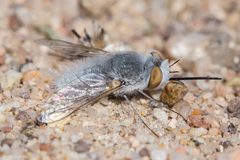
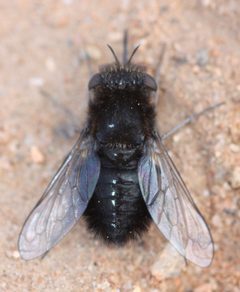
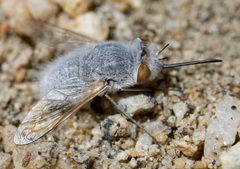
1Cythereinae is a of bee flies (Bombyliidae) established by Becker in 1913. It comprises approximately 19 and 150 described . Members are true flies in the order Diptera, characterized by the -like appearance typical of the . The subfamily is distinguished by specific morphological features that separate it from other bombyliid lineages, though detailed biological studies remain limited for many included .
Pronunciation
How to pronounce Cythereinae: /sɪˈθɪəriəˌni/
These audio files are automatically generated. While they are not always 100% accurate, they are a good starting point.
Identification
Cythereinae can be distinguished from other Bombyliidae by wing venation patterns and structural characteristics of the and . The subfamily lacks the extreme elongation seen in some related groups. Accurate identification to or level requires examination of microscopic features including chaetotaxy, wing patterns, and male genitalia structure. The 19 constituent genera vary considerably in body size and coloration, precluding broad visual generalizations.
Images
Distribution
of Cythereinae have been documented across multiple continents, with records from the Palearctic, Afrotropical, and Oriental regions. The shows highest diversity in arid and semi-arid zones of the Old World. Specific distribution patterns vary markedly among the constituent .
Similar Taxa
- BombyliinaeAnother of Bombyliidae; distinguished from Cythereinae by differences in wing venation, particularly the arrangement of wing and the structure of the radial sector.
- AnthracinaeBombyliid with overlapping distribution; separated from Cythereinae by antennal structure and details of the wing margin.
- UsiinaeRelated bombyliid ; Cythereinae lacks the distinctive wing folding and modified leg structures characteristic of Usiinae.
More Details
Taxonomic stability
The circumscription of Cythereinae has remained relatively stable since Becker's 1913 establishment, though the placement of certain has been revised in recent phylogenetic studies of Bombyliidae.
Research status
Despite the 's moderate size (150 ), many Cythereinae remain poorly known biologically, with descriptions based primarily on rather than or larval .