
Lasiopogon shermani
Cole & Wilcox, 1938
Lasiopogon shermani is a of robber fly in the Asilidae, described by Cole and Wilcox in 1938. The Lasiopogon comprises small to medium-sized robber flies commonly found in sandy . As with other Asilidae, this species is predatory, capturing other insects in . The species is documented from a limited number of observations, suggesting it may be uncommon or underrecorded.
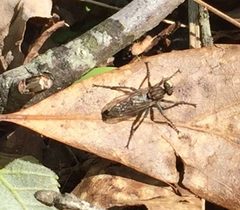
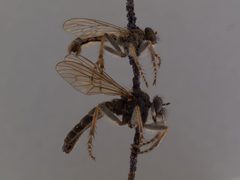
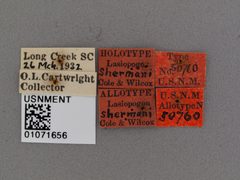
Pronunciation
How to pronounce Lasiopogon shermani: //ˌlæsiˈɒpoʊɡɒn ˈʃɜːrməni//
These audio files are automatically generated. While they are not always 100% accurate, they are a good starting point.
Identification
Members of Lasiopogon can be distinguished from other Asilidae by their generally small size, slender build, and characteristic facial mystax composed of fine, relatively sparse setae. Specific identification of L. shermani requires examination of male genitalia and comparison with related in the genus. The species lacks the prominent abdominal patterns seen in some .
Images
Habitat
Sandy substrates, including dunes and riverine sandbars; associated with open, sparsely vegetated ground where perching sites are available.
Distribution
Documented from western North America; precise range boundaries remain poorly defined due to limited collection records.
Behavior
Perches on bare ground or low vegetation to ambush prey; is rapid and maneuverable, typical of the .
Ecological Role
of small flying insects; contributes to regulation in sandy systems.
Similar Taxa
- Lasiopogon asilomarOverlaps in geographic range and preference; distinguished by male genitalic structure and subtle differences in mystax .
- Lasiopogon cinctusSimilar size and sandy association; L. cinctus typically shows more pronounced abdominal banding.