
Lasiopogon albidus
Cole & Wilcox, 1938
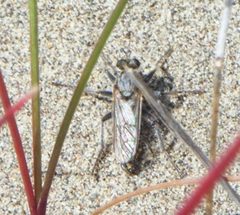
Lasiopogon albidus is a of robber fly (Diptera: Asilidae) in the Lasiopogon, originally described by Cole & Wilcox in 1938. It belongs to the bivittatus section of the genus, a group of western Nearctic species. The species was redescribed in a 2021 taxonomic revision that included 13 new species descriptions and updated the of the genus using molecular data. As with other robber flies, it is presumed to be a predatory insect, though specific biological details for this species remain poorly documented.
Pronunciation
How to pronounce Lasiopogon albidus: //ˌleɪ.siˈoʊ.pə.ɡɒn ˈæl.bɪ.dəs//
These audio files are automatically generated. While they are not always 100% accurate, they are a good starting point.
Identification
Identification requires reference to the updated key to western Nearctic Lasiopogon provided in the 2021 revision by Cannings and colleagues. As a member of the bivittatus section, L. albidus shares characteristics with other in this group, though specific distinguishing features from are not detailed in available sources.
Images
Distribution
Western Nearctic region. Specific range details for this are not provided in available sources.
Similar Taxa
- Lasiopogon bivittatusBoth belong to the bivittatus section of the and share western Nearctic distributions; distinguished by specific morphological characters detailed in taxonomic keys
- Lasiopogon californicusAnother western Nearctic in the bivittatus section, originally described in the same 1938 publication as L. albidus
More Details
Taxonomic History
Originally described by Cole & Wilcox in 1938. Redescribed in 2021 as part of a comprehensive revision of the bivittatus section that included molecular phylogenetic analysis using COI, AATS, PEPCK, and Wg gene loci.
Phylogenetic Position
Placement within the bivittatus section confirmed by both morphological and molecular data in the 2021 revision.
Sources and further reading
- BugGuide
- GBIF taxonomy match
- iNaturalist taxon
- NCBI Taxonomy
- Catalogue of Life
- Hungry, Hungry Hawaiian Caterpillar: Program Aims to Restore the Endemic Kamehameha Butterfly
- Bug Eric: Wasp Wednesday: Pseudomalus auratus
- Bug Eric: Masters of Mud: Auplopus Spider Wasps
- Molecular phylogeny of the genus Lasiopogon (Diptera: Asilidae) and a taxonomic revision of the bivittatus section