
Heteropogon macerinus
(Walker, 1849)
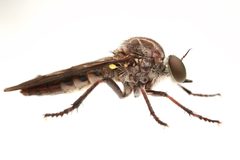
Heteropogon macerinus is a small robber fly in the Asilidae, measuring approximately 10 mm in length. The exhibits distinctive courtship in which males hover before females and stroke their eyeballs with ornamented front . are predatory, capturing other insects in and returning to perches to feed. The species frequents forest edges where it perches conspicuously on twig tips at level.
Pronunciation
How to pronounce Heteropogon macerinus: //ˌhɛtərəˈpoʊɡɒn məˈsɛrɪnəs//
These audio files are automatically generated. While they are not always 100% accurate, they are a good starting point.
Identification
The combination of small size (~10 mm), drab coloration, and habit of perching on twig tips at forest edges distinguishes this from many other robber flies. Definitive identification is aided by observing the characteristic courtship : males hover before perched females with hind legs spread to display red coloration, then stroke the female's eyeballs with their ornamented front . The Heteropogon is distinguished from similar small asilids by these behavioral traits and tarsal ornamentation in males.
Images
Appearance
measure approximately 10 mm in length with a fairly drab coloration. Males possess ornamented setae on the front , forming decorative "bracelets" used during courtship. The body is typical of small asilids, with a stout build adapted for aerial .
Habitat
Forest edges and edge , including cemetery edges. perch on twig tips, typically at level, in semi-open situations with access to flying insect prey.
Distribution
Recorded from eastern North America, including southern Ohio. The has been observed in Lynx, Ohio, and appears to be widespread enough that encounters are expected across much of North America.
Seasonality
have been observed in August in Ohio. Activity likely extends through summer months, though specific is poorly documented.
Diet
are predatory on other insects. Prey includes winged ants and other flying insects captured in aerial pursuit.
Life Cycle
Larval unknown. Related asilid larvae are typically external of or other insect larvae.
Behavior
are sit-and-wait that survey for prey from elevated perches, cocking their to track passing insects. When prey is detected, they dash out, capture it in , and return to the perch to feed using . Courtship involves complex aerial display: the female perches high on vegetation, the male hovers before her with hind legs spread, and if accepted, strokes her eyeballs with his ornamented front while hovering.
Ecological Role
on other insects, including winged ants, contributes to regulation of flying insect . Potential larval of soil-dwelling insects.
Human Relevance
Subject of entomological interest due to elaborate courtship . No known economic importance.
Similar Taxa
- AblautusSimilar small size and drab coloration, but Ablautus are sand-colored, inhabit open sandy rather than forest edges, and exhibit different courtship (males alight near females and wave front legs rather than hovering and stroking eyeballs).
- Other small AsilidaeMany small robber flies lack the distinctive male tarsal ornamentation and the specific courtship of hovering with spread hind legs and eyeball-stroking.
More Details
Courtship Documentation
Video documentation of the courtship exists from observations in Lynx, Ohio on August 25, 2013, providing rare behavioral evidence for this .
Research Potential
The larval and remain unknown, representing a significant gap in knowledge for this otherwise well-documented .