
Cyrtopogon pulcher
Back, 1909
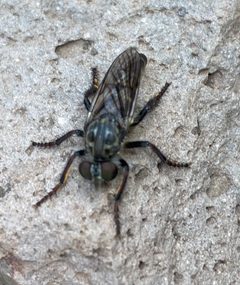
Cyrtopogon pulcher is a of robber fly ( Asilidae) described by Back in 1909. It belongs to the diverse Cyrtopogon, which comprises predatory flies found primarily in North America. Robber flies in this genus are generally small to medium-sized with distinctive facial features and predatory habits. The species name "pulcher" (Latin for "beautiful") likely refers to some aspect of its coloration or .
Pronunciation
How to pronounce Cyrtopogon pulcher: //ˌsɜrtəˈpoʊɡɒn ˈpʊlkər//
These audio files are automatically generated. While they are not always 100% accurate, they are a good starting point.
Identification
Members of Cyrtopogon can be distinguished from similar Asilidae by their generally smaller size, more slender build, and specific wing venation patterns. C. pulcher specifically may be recognized by coloration patterns consistent with its specific epithet, though detailed diagnostic features require examination of type material. Separation from typically requires examination of male terminalia and other fine morphological details.
Images
Habitat
preferences for Cyrtopogon generally include open, sunny areas such as grasslands, meadows, forest edges, and riparian corridors. Specific microhabitat data for C. pulcher is limited, but are often found perching on bare ground or low vegetation.
Distribution
The distribution of Cyrtopogon pulcher is not comprehensively documented. The Cyrtopogon is predominantly Nearctic in distribution, with most occurring in western North America. Based on GBIF and iNaturalist records, observations exist from western North America, though precise range boundaries remain undefined.
Seasonality
activity period for Cyrtopogon typically spans late spring through summer, with peak varying by latitude and elevation. Specific period data for C. pulcher is not well documented.
Behavior
As with all Asilidae, C. pulcher is an aerial that captures other insects in . Members of Cyrtopogon typically perch on the ground or low vegetation, sallying forth to capture passing prey. Prey capture involves the use of spiny legs and a modified for piercing and injecting digestive .
Ecological Role
As a predatory insect, C. pulcher functions as a mid-level in terrestrial , helping regulate of other insects. Robber flies are generally considered beneficial in most , though their predatory impact on specific prey populations has not been quantified for this .
Human Relevance
No documented direct interactions with humans. Asilidae are generally beneficial insects that do not bite humans unless handled roughly. No economic importance has been established for this .
Similar Taxa
- Cyrtopogon willistoniCongeneric with similar overall ; distinguished by subtle differences in coloration and male genitalia structure
- Other Cyrtopogon speciesMany overlap in distribution and general appearance; precise identification requires examination of diagnostic morphological characters including facial bristle arrangement and genitalic structures
- Stenopogon speciesSimilar slender Asilidae that may occur in sympatry; distinguished by wing venation details and facial profile
More Details
Taxonomic Note
Cyrtopogon pulcher was described by Back in 1909. The Cyrtopogon has undergone taxonomic revision, and concepts have been refined based on morphological and molecular data. Some sources may list this species under different combinations or note it as a pending revision.
Collection Records
The is represented in entomological collections, including the Encyrtid Holdings at the University of California, Riverside Entomology Research Museum, though it is not among the primary focus groups of that collection. iNaturalist records indicate at least 5 research-grade observations, suggesting it is encountered infrequently by naturalists.