
Cyrtopogon glarealis
Melander, 1923
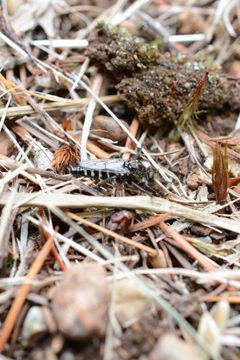
Cyrtopogon glarealis is a of robber fly in the Asilidae, described by Melander in 1923. The Cyrtopogon comprises predatory flies known for their distinctive courtship and agile . As with other asilids, this species likely hunts other insects in flight. Records indicate it has been documented in western North America, including Colorado.
Pronunciation
How to pronounce Cyrtopogon glarealis: /ˌsɜːrtoʊˈpoʊɡɒnˌɡlærɪˈeɪlɪs/
These audio files are automatically generated. While they are not always 100% accurate, they are a good starting point.
Identification
Members of the Cyrtopogon can be distinguished from other robber fly genera by their slender body form, relatively long legs, and characteristic male courtship postures involving the forelegs. -level identification within Cyrtopogon requires examination of genitalic structures and detailed morphological features not discernible from general field observations.
Images
Distribution
Documented in western North America, with observations from Colorado. The specific epithet 'glarealis' (relating to gravel or bare ground) may suggest association with open, rocky, or sparsely vegetated terrain.
Behavior
Males of the Cyrtopogon, including C. glarealis, have been observed performing that involve extending the forelegs toward females. This has been documented in photographic records from Colorado.
Ecological Role
As a predatory robber fly, likely functions as an aerial of other insects, contributing to in its .
Similar Taxa
- Cyrtopogon willistoniAnother Cyrtopogon found in similar western North American ; distinguished by specific morphological features and potentially overlapping range in Colorado.
- Other Asilidae genera (e.g., Efferia, Promachus)Larger or more robust robber flies with different body proportions and lacking the slender build and characteristic courtship postures of Cyrtopogon.
More Details
Nomenclature
The specific epithet 'glarealis' derives from Latin 'glarea' meaning gravel, possibly alluding to preferences.
Taxonomic note
Only 15 observations recorded in iNaturalist as of source date, indicating this is infrequently encountered or underreported.