
Cyrtopogon anomalus
Cole, 1919
Cyrtopogon anomalus is a of robber fly in the Asilidae, described by Cole in 1919. The Cyrtopogon comprises predatory flies that typically hunt other insects in or from perches. This species belongs to a diverse group of asilids found across North America. Available information about this specific species is limited, with only 17 observations recorded on iNaturalist as of the knowledge cutoff.
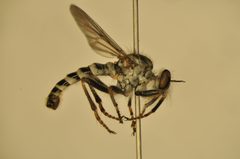
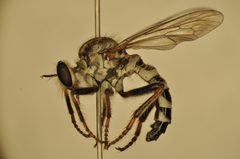
Pronunciation
How to pronounce Cyrtopogon anomalus: //sɪəˈtɒpoʊɡɒn əˈnɒmələs//
These audio files are automatically generated. While they are not always 100% accurate, they are a good starting point.
Images
Distribution
North America; specific range details not well documented. The has been recorded in the southwestern United States based on limited observation data.
Behavior
As a member of the Asilidae , individuals of this are predatory and typically hunt from perches, capturing other insects in using their strong legs and piercing mouthparts. However, specific behavioral observations for C. anomalus have not been documented.
Ecological Role
As a predatory robber fly, this likely functions as an aerial of other insects, contributing to of various groups within its .
More Details
Taxonomic Note
The specific epithet 'anomalus' (Latin for 'abnormal' or 'anomalous') suggests this was distinguished from by some unusual morphological feature at the time of its description. The original description by Cole (1919) would provide details on these diagnostic characters.
Data Deficiency
This is notably data-deficient, with minimal published information beyond its original description and basic taxonomic placement. The low number of iNaturalist observations (17) suggests it is either genuinely rare, undercollected, or difficult to identify in the field.