
Laphria index
McAtee, 1919
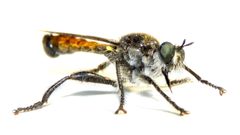
Laphria index is a of robber fly in the Asilidae, described by McAtee in 1919. The Laphria contains species known for effective mimicry, though specific details for L. index remain limited in published literature. The species has been recorded in the northeastern United States.

Pronunciation
How to pronounce Laphria index: //ˈlæf.ri.ə ˈɪn.dɛks//
These audio files are automatically generated. While they are not always 100% accurate, they are a good starting point.
Identification
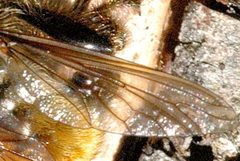
within Laphria are recognized by their robust, hairy bodies that closely resemble bumble bees (Bombus), a form of . Laphria species have thick, stout with a terminal segment that is not notably slender—this distinguishes them from the related Mallophora, which has a thin terminal antennal segment and generally hairier appearance. Specific diagnostic features for L. index versus are not documented in available sources.
Images
Distribution
Recorded from Vermont, United States. The broader distribution pattern within North America is not well documented in available literature.
Ecological Role
As a member of the Asilidae, L. index is presumed to function as an aerial of other insects, though specific prey records are not documented.
Similar Taxa
- MallophoraBoth contain effective mimics; distinguished by antennal structure—Laphria has thick, stout while Mallophora has a thin terminal segment.
- PromachusLarge robber flies sometimes confused with Laphria due to size; Promachus lack the dense pile and -like coloration of Laphria.
More Details
Taxonomic note
The was described by McAtee in 1919. The name Laphria derives from Greek, though the etymological meaning is not documented in available sources.