
Laphria fernaldi
(Back, 1904)
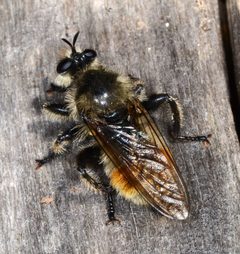
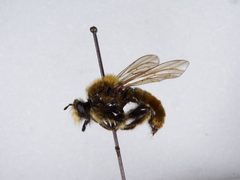
Laphria fernaldi is a of robber fly in the Asilidae. The Laphria is known for effective mimicry, with members resembling bees in both appearance and to deceive and prey. This species was originally described as Dasyllis fernaldi by Back in 1904 before being transferred to Laphria. Like other robber flies, it is a predatory insect that captures other arthropods in .
Pronunciation
How to pronounce Laphria fernaldi: //ˈlæf.ri.ə fərˈnæl.di//
These audio files are automatically generated. While they are not always 100% accurate, they are a good starting point.
Identification
Laphria are distinguished from other mimics such as Mallophora by their thick (Mallophora has thin terminal segments on the antennae). Laphria fernaldi may be separated from by specific morphological features, though detailed diagnostic characters require examination of or authoritative keys. The is noted for having particularly realistic bumble bee mimicry among robber flies.
Images
Habitat
Based on observations of related Laphria , members of this are typically associated with woodland edges and forested areas where they perch on vegetation to hunt. The specific preferences of L. fernaldi are not well documented in available sources.
Diet
Behavior
Like other Laphria , L. fernaldi likely exhibits mimicry , including patterns that resemble bees seeking nectar. This mimicry serves dual purposes: deterring that avoid stinging insects, and allowing the fly to approach prey that mistake it for a harmless . Robber flies in this typically perch on leaves or branches, spot flying prey, and pursue and capture it in flight before returning to a perch to feed.
Ecological Role
As a predatory insect, Laphria fernaldi functions as an in its , contributing to regulation of insect . Its mimicry of bumble bees represents a case of in the context of predator avoidance, and potentially in relation to prey capture.
Similar Taxa
- Mallophora speciesAlso mimics in Asilidae, but distinguished by thin terminal antennal segments versus thick in Laphria
- Syrphid fly mimics (e.g., Mallota posticata)Flower flies in Syrphidae that also mimic bumble bees, but belong to a different dipteran with different wing venation and lacking the predatory of robber flies
More Details
Taxonomic history
Originally described as Dasyllis fernaldi by Back in 1904, later transferred to the Laphria. The basionym Dasyllis fernaldi is recorded in NCBI .