
Laphria asturina
(Bromley, 1951)
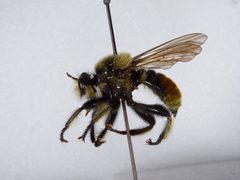
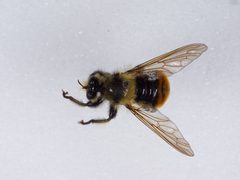
Laphria asturina is a of robber fly ( Asilidae), a group of predatory dipterans known for their aggressive hunting . The species was originally described as Bombomima asturina before being transferred to Laphria. Like other members of the Laphria, it is likely a mimic, though specific documentation of this trait for L. asturina is limited. Robber flies in this genus are notable for their convincing mimicry of hymenopterans, which may provide protection from .
Pronunciation
How to pronounce Laphria asturina: /ˈlæf.ri.ə æˈstʊr.ɪ.nə/
These audio files are automatically generated. While they are not always 100% accurate, they are a good starting point.
Identification
Laphria asturina can be distinguished from similar by examination of specific morphological characters established in the original description by Bromley (1951). Within the Laphria, identification typically requires close examination of structure, facial characteristics, and patterns of setation. Laphria species generally have thick antennae (unlike the thin terminal segment seen in Mallophora, another mimic genus). Differentiation from other bumble bee mimicking asilids such as Mallophora requires attention to antennal structure and body hair .
Images
Ecological Role
As a member of the Asilidae, L. asturina functions as an aerial in its . Robber flies are predators that capture other insects in , contributing to of various groups. The Laphria includes that are effective mimics of bumble bees, which may confer protective advantage against vertebrate predators that avoid aposematic hymenopterans.
Similar Taxa
- MallophoraAnother of -mimicking robber flies; distinguished by thin terminal antennal segment and generally hairier body
- LaphriaCongeneric require detailed morphological examination for differentiation; many share mimicry appearance