
Atomosia puella
(Wiedemann, 1828)
Common Micropanther
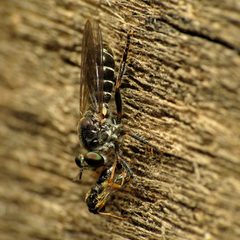
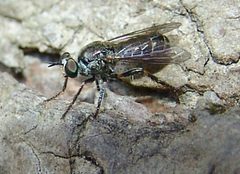
Atomosia puella is a of robber fly in the Asilidae, commonly known as the Common Micropanther. Robber flies are predatory dipterans known for their aggressive hunting and distinctive adapted for capturing other insects in . The species was originally described by Wiedemann in 1828 under the basionym Laphria puella before being transferred to the Atomosia.
Pronunciation
How to pronounce Atomosia puella: /æ.təˈmoʊ.siə pjuˈɛl.ə/
These audio files are automatically generated. While they are not always 100% accurate, they are a good starting point.
Identification
Atomosia puella can be distinguished from other robber flies by its membership in the Atomosia, which is characterized by specific morphological features of the Asilidae . The epithet 'puella' (Latin for 'girl' or 'maiden') may reference particular coloration or size characteristics, though specific diagnostic features for this species are not well-documented in available sources. Identification to species level within Atomosia typically requires examination of genitalia and other fine morphological details.
Images
Distribution
Distribution records indicate presence in the United States, specifically including Vermont. The is part of the Nearctic fauna, though precise range boundaries are not well-documented in available sources.
Behavior
Ecological Role
As a predatory insect, Atomosia puella likely functions as a of other flying insects, contributing to of various insect groups within its . Robber flies are considered beneficial insects in many due to their on pest .
Similar Taxa
- Other Atomosia speciesCongeneric share the same -level characteristics and require careful morphological examination, particularly of male genitalia, for definitive identification.
- Laphria speciesHistorically classified under this (as Laphria puella), these robber flies share similar body plans and predatory habits, necessitating taxonomic revision for proper separation.
- Other Asilidae generaRobber flies across multiple exhibit convergent morphological adaptations for , including similar body shapes, leg spination, and facial mystax, making visual identification challenging without detailed examination.
More Details
Taxonomic History
Originally described as Laphria puella by Wiedemann in 1828, this was later transferred to the Atomosia. The basionym Laphria puella reflects historical classification practices in Asilidae that have been revised through subsequent taxonomic work.
Observation Data
The has accumulated 4,389 observations on iNaturalist, indicating it is relatively frequently encountered and photographed by naturalists, though this may partly reflect the general observability of robber flies rather than species abundance.