
Nevadasilus
Artigas & Papavero, 1995
Species Guides
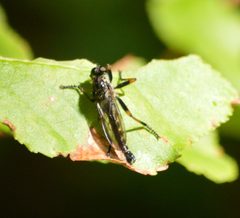
2Nevadasilus is a of robber flies ( Asilidae) established by Artigas & Papavero in 1995. The genus is recognized within the diverse Asilidae family, which comprises predatory flies known for their aerial hunting . Records indicate the genus contains distributed in western North America, particularly associated with arid and semi-arid regions. The genus name reflects its documented occurrence in Nevada and surrounding areas.
Pronunciation
How to pronounce Nevadasilus: //nɛˈvɑːdəˌsaɪləs//
These audio files are automatically generated. While they are not always 100% accurate, they are a good starting point.
Identification
As a member of Asilidae, in this likely exhibit the -diagnostic features: a concave facial profile (mystax present), strong spiny legs adapted for prey capture, and a robust predatory body form. Distinction from other asilid genera requires examination of specific morphological characters including male terminalia, wing venation patterns, and facial bristle arrangement. The genus is distinguished from related western Nearctic asilids by combinations of characters established in the original 1995 description.
Images
Habitat
within this have been documented from arid and semi-arid environments of the western United States, including sagebrush steppe, pinyon-juniper woodlands, and open desert scrub. Elevational records span from lowland basins to moderate montane elevations. These align with the broader ecological preferences of many western Nearctic Asilidae.
Distribution
Western Nearctic region, with documented occurrence in Nevada, California, Oregon, Idaho, and adjacent states. The distribution centers on the Great Basin and surrounding mountain ranges.
Behavior
As with all Asilidae, in this are predatory as , capturing other arthropods in using their spiny legs. Hunting likely involves perching on exposed substrates and sallying after passing prey.
Ecological Role
function as of other flying insects, potentially influencing local dynamics. Larval is undocumented but Asilidae larvae are generally predatory or scavenging in soil or decaying organic matter.
Similar Taxa
- EfferiaLarge western Nearctic asilid with overlapping distribution; distinguished by male terminalia structure and facial setation patterns
- ProctacanthusAnother robust western asilid ; separated by differences in wing venation and leg spine configuration
- MachimusWidespread asilid with some western ; requires careful examination of genitalic and thoracic characters for separation
More Details
Taxonomic History
The was erected in 1995 to accommodate previously misplaced in other asilid genera, reflecting refined understanding of western Nearctic robber fly relationships.
Species Diversity
The contains multiple described , though comprehensive taxonomic revision and species-level documentation remain incomplete in public databases.