
Efferia canella
Sierritas Hammertail
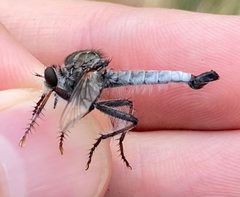
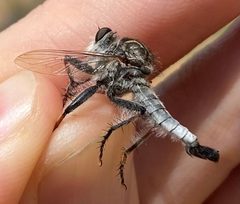
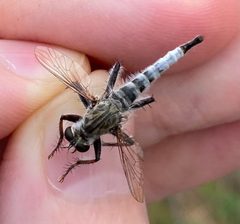
Efferia canella is a of robber fly in the Asilidae, commonly known as the Sierritas Hammertail. It belongs to the large and diverse Efferia, which contains numerous species distributed primarily across North and South America. Robber flies in this genus are predatory insects known for their robust build and agile capabilities. The specific epithet "canella" and "Sierritas Hammertail" suggest an association with the Sierritas Mountains region, though detailed ecological information for this particular species remains limited.
Pronunciation
How to pronounce Efferia canella: //ˈɛf.ɛr.i.ə kəˈnɛl.lə//
These audio files are automatically generated. While they are not always 100% accurate, they are a good starting point.
Images
Distribution
The name and "Sierritas Hammertail" suggest occurrence in or near the Sierritas Mountains, likely in the southwestern United States (possibly Arizona or adjacent regions). However, precise geographic range documentation is not available from the provided sources.
Behavior
As with other members of the Efferia, this is presumed to be an active aerial , capturing other insects in using its strong legs and piercing mouthparts. Males of Efferia species typically exhibit a distinctly swollen genital capsule at the tip of the , which may be used for species identification.
Ecological Role
As a predatory robber fly, Efferia canella likely functions as an important of other flying insects within its , contributing to of potential pest and participating in dynamics as both predator and prey.
Similar Taxa
- Efferia spp.Other within the Efferia share similar general , including robust body form, large , and predatory habits. Identification to species level typically requires examination of male genitalia and other detailed morphological features.
- Triorla spp.Triorla was historically treated as a segregate of Efferia and shares similar overall appearance. Some authorities consider Triorla a valid , while others subsume it within Efferia. The two groups can be difficult to distinguish without detailed examination.