
Efferia cana
(Hine, 1916)
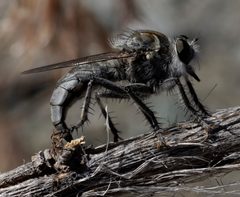
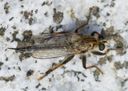
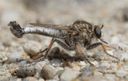
Efferia cana is a of robber fly in the Asilidae, described by Hine in 1916. The Efferia belongs to a group of large, predatory flies commonly known as robber flies or assassin flies. Members of this genus are characterized by their robust build, prominent , and predatory . Efferia cana is part of a diverse of Asilidae species found in North America, where these flies occupy important roles as aerial in various terrestrial .
Pronunciation
How to pronounce Efferia cana: /ˈɛfəˌriɑ ˈkænə/
These audio files are automatically generated. While they are not always 100% accurate, they are a good starting point.
Identification
Efferia cana can be distinguished from similar Efferia by examination of specific morphological characters, particularly those related to genitalia and coloration patterns. The species exhibits the typical Efferia body plan: a stout, somewhat flattened body with a prominent mystax (beard of bristles) on the , large that often meet at the top of the in males, and strong, spiny legs adapted for capturing prey in . Accurate identification to species level typically requires examination by a in Asilidae .
Images
Distribution
Efferia cana has been recorded in North America. The precise geographic range is not well documented in the available sources, though the Efferia is broadly distributed across the continent.
Ecological Role
As a member of the Asilidae, Efferia cana functions as an aerial , feeding on a variety of other insects. Robber flies are considered beneficial insects in many due to their role in controlling of other arthropods.
Similar Taxa
- Efferia sp.Other within the Efferia share the general body plan and predatory habits, requiring careful examination of diagnostic characters for separation.
- Triorla interruptaFormerly placed in Efferia, this and other Triorla species were segregated based on morphological differences; historical confusion between these necessitates careful distinction.