
Spongiphoridae
Verhoeff, 1902
Little Earwigs
Subfamily Guides
2- Labiinae(little earwigs)
- Spongiphorinae(little earwigs)
is a large of comprising more than 40 and approximately 510–527 . Members are primarily distributed in tropical and subtropical regions worldwide, with some species extending into temperate zones. The family is characterized by a single in males and lacks clear morphological synapomorphies, contributing to ongoing debates about its monophyly. Subfamilial classification remains unstable due to reliance on limited traits prone to .
Pronunciation
How to pronounce Spongiphoridae: //ˌspɒndʒɪˈfɒrɪdiː//
These audio files are automatically generated. While they are not always 100% accurate, they are a good starting point.
Identification
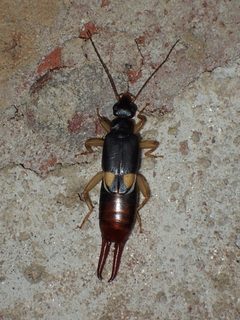
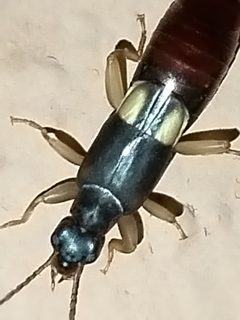
Small to very small body size in some (e.g., Geracinae under 10 mm). Males possess a single . Forceps shape varies; in some subfamilies such as Geracinae, forceps are similar in both sexes. Tarsal present in some groups. Reliable identification to subfamily or requires examination of genital and often molecular data.
Images
Habitat
Primarily tropical and subtropical . Some inhabit riparian vegetation near water's edge, including bamboo, gramineous weeds, tea trees, and various other plants. Specific species such as Spongovostox lewisi are associated with fungal fruiting bodies of Cryptoporus volvatus on pine trees.
Distribution
Widespread across tropical and subtropical regions globally, including Great Nicobar Islands, Southeast Asia, Oceania, Australia, and New Zealand. Some extend into temperate regions including northern Japan. Records exist from Scandinavia (Denmark, Norway, Sweden) and Malaysia.
Life Cycle
Ovarian occurs in some (Spongiphorinae, Labiinae, Sparattinae), where embryonic development begins within ovaries before deposition. Females deposit eggs that hatch; maternal care with egg-guarding has been observed. Nymphs progress through instars to adulthood.
Behavior
Defensive posture with raised forceps when disturbed. Leg-cleaning observed. -like immobility when contacting water droplets, with resumption of activity after water evaporation. Some exhibit specific mycophily to fungal fruiting bodies. Courtship and mating behaviors documented with measured copulation durations.
Ecological Role
Fungus-associated decomposer and . Potential role in nutrient cycling in forest through association with decaying wood fungi.
Similar Taxa
- ForficulidaeBoth are in Forficulidea; distinguished by single in males versus paired penes in Forficulidae, and generally smaller body size in many Spongiphoridae .
Sources and further reading
- BugGuide
- Wikipedia
- GBIF taxonomy match
- iNaturalist taxon
- NCBI Taxonomy
- Catalogue of Life
- First record of the subfamily Geracinae Brindle, 1971 and genus Pseudovostox Borelli, 1926 (Dermaptera, Spongiphoridae) in China, with a description of a new species
- Placement of Spongiphora lewisi de Bormans, 1903, an enigmatic earwig species of Spongiphoridae (Insecta, Dermaptera), as revealed by integrative taxonomy.