
Microprius rufulus
(Motschulsky, 1863)
cylindrical bark beetle
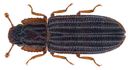
Microprius rufulus is a small cylindrical bark beetle in the Zopheridae, measuring approximately 3.2 mm in length. The has a broad native distribution spanning tropical Africa, northern Africa, the Middle East, and South Asia, with introduced established in Germany, Cuba, USA, Malta, and the Cayman Islands. It is typically found under tree bark and exhibits attraction to light.
Pronunciation
How to pronounce Microprius rufulus: /maɪˈkroʊpriəs ˈruːfjʊləs/
These audio files are automatically generated. While they are not always 100% accurate, they are a good starting point.
Identification
Distinguished from other bark beetles by combination of small size (~3.2 mm), cylindrical body form, and association with bark . Within Zopheridae, Microprius distinguished by specific morphological features of the ; identification requires examination of detailed morphological characters not specified in available sources.
Images
Habitat
Found under bark of trees. Attracted to light, suggesting activity or .
Distribution
Native range: tropical Africa (Cape Verde Islands to Madagascar), northern Africa, Middle East, and South Asia. Introduced range: Germany, Cuba, USA, Malta, and Cayman Islands.
Behavior
Attracted to light. Associated with bark microhabitat, suggesting cryptic lifestyle under tree bark.
Human Relevance
Introduced in Germany, Cuba, USA, Malta, and Cayman Islands suggest human-mediated , though specific impacts or economic significance not documented.
Similar Taxa
- Other ZopheridaeSimilar cylindrical body form; distinguished by specific morphological features and geographic distribution
- Other bark-dwelling beetlesSimilar under bark; distinguished by small size and -level characteristics
More Details
Taxonomic Note
Originally described by Motschulsky in 1863. placement in Zopheridae reflects modern classification; historically bark beetles were often grouped differently.
Collection and Observation
Light attraction provides a collection method for this otherwise cryptic living under bark.