Colobicus parilis
Pascoe, 1860
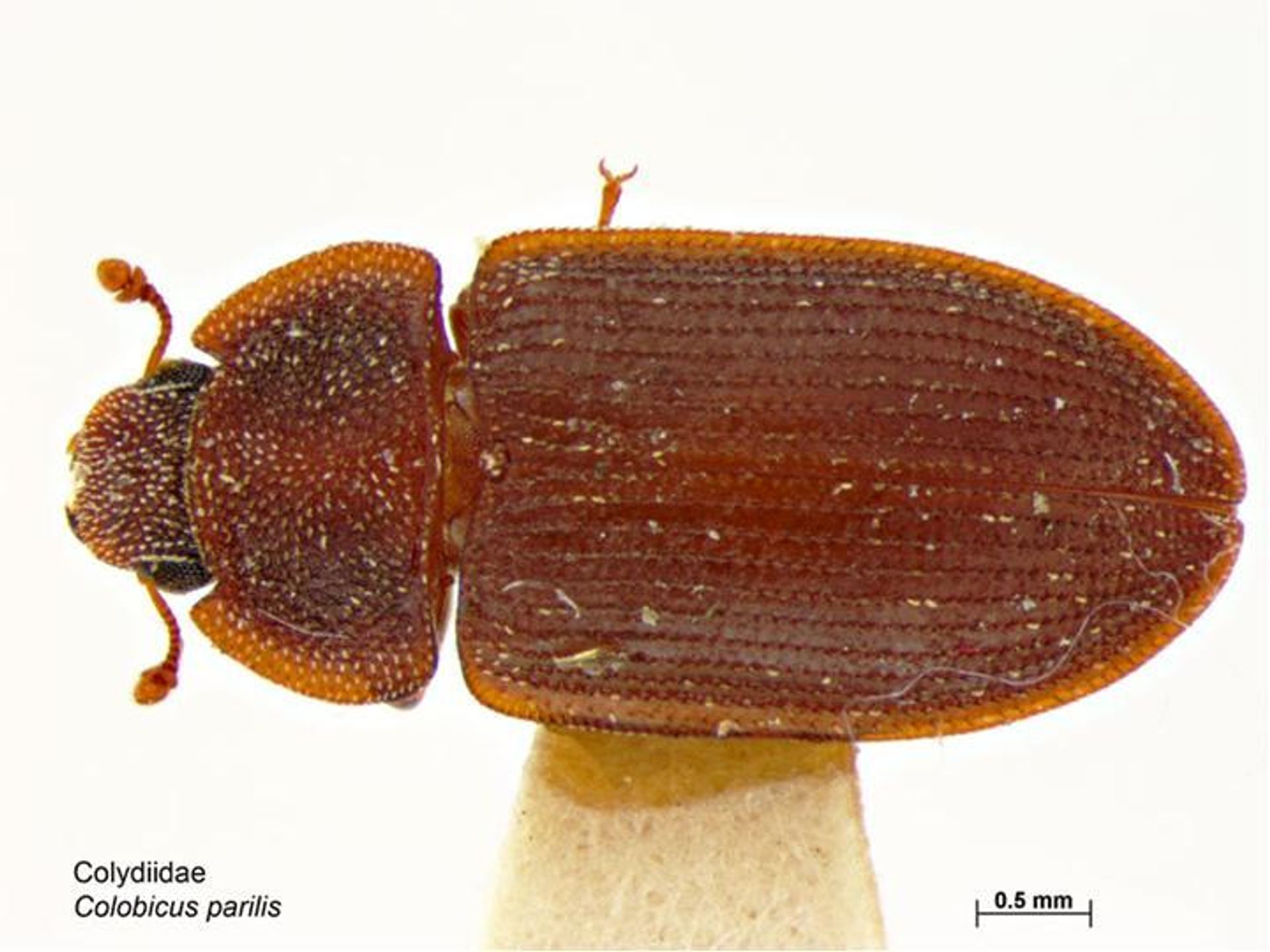
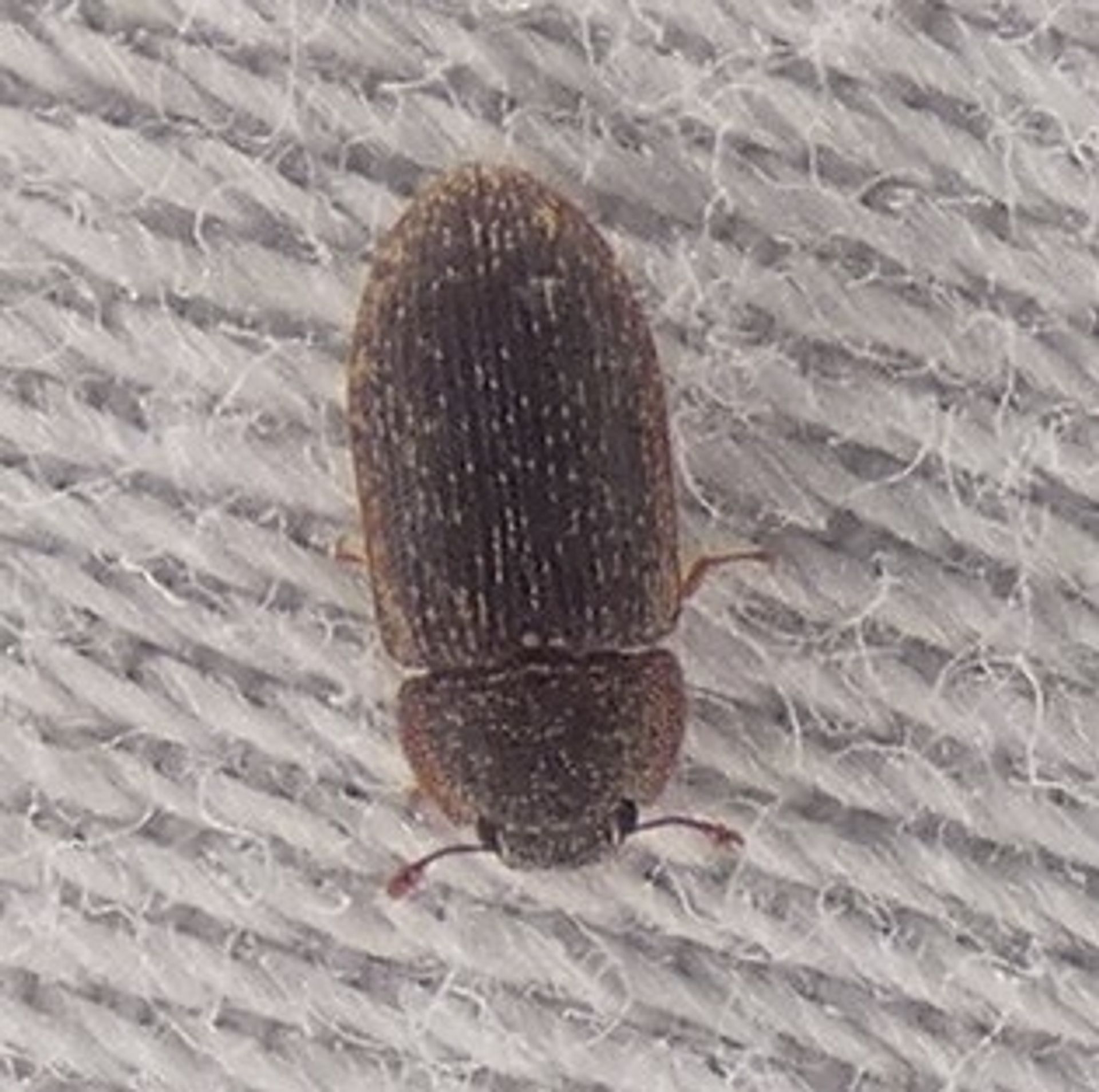
Colobicus parilis is a of cylindrical bark beetle in the Zopheridae, first described by Pascoe in 1860. It has a remarkably broad geographic distribution spanning multiple continents including Africa, Australia, North America, Oceania, and Southern Asia. This wide pattern is unusual among bark beetles and suggests either natural dispersal capabilities or human-mediated transport. The species belongs to a family of beetles commonly associated with dead or decaying wood.
Pronunciation
How to pronounce Colobicus parilis: /kəˈloʊbɪkəs ˈpærɪlɪs/
These audio files are automatically generated. While they are not always 100% accurate, they are a good starting point.
Identification
As a member of Zopheridae, C. parilis can be recognized by the cylindrical body form characteristic of this bark beetle . The Colobicus is distinguished within Zopheridae by specific morphological features of the and pronotum, though precise diagnostic characters for C. parilis require examination of . The may be confused with other Colobicus species, particularly in regions where multiple occur.
Images
Habitat
Associated with woody substrates; specific microhabitat preferences are not documented but inferred from -level as likely inhabiting dead or decaying bark and wood.
Distribution
Africa, Australia, North America, Oceania, and Southern Asia. The broad intercontinental distribution is notable and may reflect either natural range expansion or anthropogenic introduction to some regions.
Similar Taxa
- Other Colobicus species share the cylindrical body form and general Zopheridae ; precise identification requires examination of subtle differences in antennal structure, pronotal shape, and elytral .
More Details
Taxonomic note
The was described by Francis Pascoe in 1860 based on specimens from an unspecified locality. The extremely broad modern distribution records warrant verification, as some may represent distinct cryptic species or misidentifications.