
Statira dolera
Parsons, 1966
Pale-legged Statira
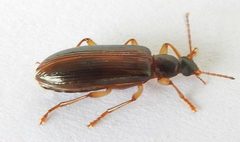
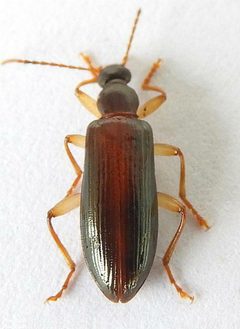
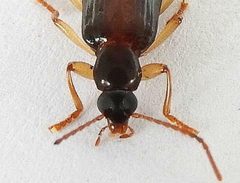
Statira dolera is a of darkling beetle in the Tenebrionidae, first described by Parsons in 1966. It belongs to the Lagriinae, a group formerly treated as a separate family (Lagriidae) before being reclassified within Tenebrionidae. The species is part of the Statira, commonly known as long-jointed beetles, which are characterized by their elongated body form and relatively long legs. As with other members of this subfamily, S. dolera does not resemble the typical robust, slow-moving darkling beetles of the subfamily Tenebrioninae.
Pronunciation
How to pronounce Statira dolera: /ˈsta.ti.ra doʊˈle.rə/
These audio files are automatically generated. While they are not always 100% accurate, they are a good starting point.
Identification
Distinguished from typical darkling beetles ( Tenebrioninae) by its elongate body and long legs. The subfamily Lagriinae, to which Statira belongs, was formerly classified as a separate due to these morphological differences. Members of Statira can be separated from ground beetles (Carabidae) by their bead-like segments and concealed (feeding on vegetation/detritus rather than predatory).
Images
Distribution
North America
Similar Taxa
- Statira basalisCongeneric in same , likely sharing elongate body form and long-legged appearance
- Other Lagriinae (long-jointed beetles)Formerly separate , now within Tenebrionidae; share aberrant darkling beetle distinct from typical Tenebrioninae
- Ground beetles (Carabidae)May be confused due to somewhat similar body form, but distinguished by bead-like , concealed , and slower movement
More Details
Taxonomic History
The Lagriinae, containing Statira, was formerly treated as the separate Lagriidae before being reclassified within Tenebrionidae. This taxonomic revision explains why Statira do not resemble 'classic' darkling beetles.