
Arthromacra
Kirby, 1837
Species Guides
3- Arthromacra aenea(Bronze Darkling Beetle)
- Arthromacra pilosella
- Arthromacra robinsoni
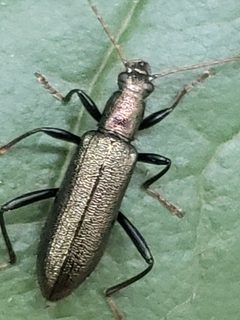
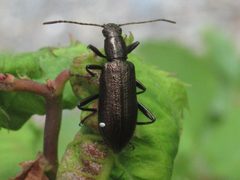
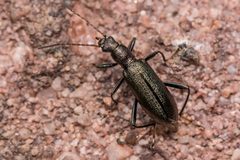
Arthromacra is a of darkling beetles in the Tenebrionidae, established by Kirby in 1837. The genus is native to North America and has been recorded from the northeastern United States, particularly Vermont. Members of this genus are part of the diverse darkling beetle fauna that inhabits forested and terrestrial environments. The genus is represented by approximately 1,850 observations on iNaturalist, indicating moderate documentation of its in the field.
Pronunciation
How to pronounce Arthromacra: //ˌɑːr.θroʊˈmæk.rə//
These audio files are automatically generated. While they are not always 100% accurate, they are a good starting point.
Identification
Arthromacra are distinguished from other tenebrionid by their elongate body form and the structure of the and legs. Specific identification to species within the genus requires examination of male genitalia and detailed morphological features of the pronotum and . The genus lacks the strongly rounded body profile seen in some related tenebrionid genera.
Images
Habitat
of Arthromacra have been recorded in forested in the northeastern United States. Specific microhabitat preferences are not well documented, but like many tenebrionid beetles, they likely occur in leaf litter, under bark, or in decaying wood.
Distribution
Documented from the northeastern United States, with specific records from Vermont. The appears to have a North American distribution, though precise range boundaries are not established.
Ecological Role
As members of the Tenebrionidae, Arthromacra likely contribute to decomposition processes in forest through their association with decaying plant material and fungi. Specific ecological functions within the have not been studied.
Human Relevance
No documented economic importance or direct interactions with humans. The is of interest to coleopterists studying North American darkling beetle diversity.
Similar Taxa
- Other Tenebrionidae generaArthromacra is distinguished by its elongate body form and specific antennal structure; separation from related requires detailed morphological examination.
More Details
Taxonomic history
The was established by William Kirby in 1837. The original description and subsequent taxonomic revisions have not been extensively summarized in recent literature.