
Poecilocrypticus formicophilus
Gebien, 1928
Adventive Ant-loving Teneb
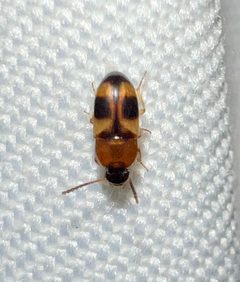
Poecilocrypticus formicophilus is a small tenebrionid native to Europe, where it has been recorded in Belgium. The has been introduced to North America and is now established across the conterminous United States. Its reflects its association with colonies, a relationship characteristic of the . The species is frequently documented on iNaturalist, suggesting it is readily encountered by observers.
Pronunciation
How to pronounce Poecilocrypticus formicophilus: //ˌpiːsɪloʊˈkrɪptɪkəs fɔrmɪˈkɒfɪləs//
These audio files are automatically generated. While they are not always 100% accurate, they are a good starting point.
Identification
Distinguished from native North American tenebrionids by its European origin and -associated . Within the Poecilocrypticus, identification to level requires examination of subtle morphological characters; P. formicophilus is the only member of the genus known to be established in North America. Small body size and compact form are consistent with myrmecophilous (ant-loving) beetles.
Images
Habitat
Associated with colonies; specific nesting substrate preferences are not well documented.
Distribution
Native to Europe (confirmed present in Belgium). Introduced and established in the conterminous United States.
Host Associations
- Formicidae - myrmecophily epithet 'formicophilus' indicates -loving habit; specific ant not documented
Behavior
Myrmecophilous; lives in association with colonies. Specific behavioral adaptations to ant colony integration have not been described.
Human Relevance
An introduced in North America; not known to be economically significant.
Similar Taxa
- Other small myrmecophilous beetlesSimilar size and -association; distinguished by taxonomic placement in Tenebrionidae and European origin
- Native North American TenebrionidaeP. formicophilus is distinguished by its non-native status and specific -association