
Hymenochara
Campbell, 1978
Species Guides
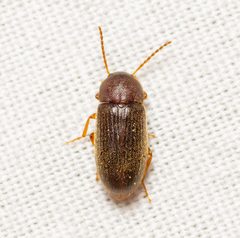
2Hymenochara is a of darkling beetles in the Tenebrionidae, described by Campbell in 1978. The genus is poorly documented in scientific literature, with limited information available on its composition, , and . It belongs to the diverse tenebrionid lineage, which comprises predominantly detritivorous and xerophilic beetles. The genus appears to be rarely encountered, with few observations recorded in biodiversity databases.
Pronunciation
How to pronounce Hymenochara: //ˌhaɪmɛnoʊˈkɛərə//
These audio files are automatically generated. While they are not always 100% accurate, they are a good starting point.
Identification
Hymenochara can be distinguished from other Tenebrionidae by the combination of morphological characters used in Campbell's 1978 original description, though specific diagnostic features are not widely documented in accessible literature. As with many tenebrionid genera, identification requires examination of subtle differences in antennal structure, tarsal formula, and elytral .
Images
Distribution
The precise geographic distribution of Hymenochara is not well documented. Based on the original description and patterns, the likely occurs in arid or semi-arid regions where Tenebrionidae are commonly found.
Similar Taxa
- Other Tenebrionidae generaHymenochara shares the general body plan of darkling beetles—elongate, somewhat cylindrical bodies with hardened forewings—but differs in specific morphological details of the , legs, and body proportions as defined in the original description.
More Details
Taxonomic obscurity
Hymenochara represents a taxonomically obscure with minimal subsequent study since its original description. The lack of iNaturalist observations (9 total) and absence of Wikipedia coverage indicate limited public and scientific attention. This pattern is common for small, cryptic tenebrionid genera that lack economic importance or distinctive .
Original description
The was established by Campbell in 1978, but the original publication describing Hymenochara is not readily accessible in major digitized databases, limiting verification of type and diagnostic characters.