
Isomira variabilis
(Horn, 1875)
Isomira variabilis is a of darkling beetle in the Tenebrionidae, first described by Horn in 1875. Like other members of this large family, it is likely associated with decaying plant matter and soil . The Isomira contains small to medium-sized beetles found primarily in North America. Specific ecological details for this species remain poorly documented in available sources.
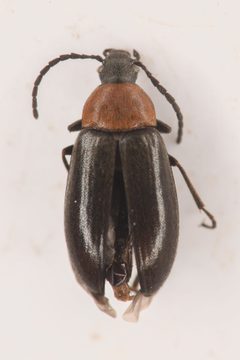
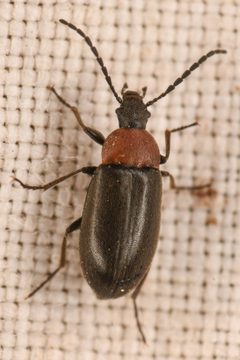
Pronunciation
How to pronounce Isomira variabilis: /ˌɪsəˈmaɪrə ˌværiˈæbɪlɪs/
These audio files are automatically generated. While they are not always 100% accurate, they are a good starting point.
Images
More Details
Taxonomic Note
The Isomira belongs to the Tenebrionidae, one of the largest families of beetles with over 20,000 described worldwide. Members of this family are commonly known as darkling beetles or tenebrionids. The specific epithet 'variabilis' suggests morphological variation was noted in the original description.
Sources and further reading
- BugGuide
- GBIF taxonomy match
- iNaturalist taxon
- Just in the tick of time: American dog tick, Dermacentor variabilis, and Black-legged tick, Ixodes scapularis — Bug of the Week
- A trio of trouble – Black-legged ticks Ixodes spp., American dog tick Dermacentor variabilis, and lone star tick Amblyomma americanum — Bug of the Week
- Time for ticks: Lone star tick, Amblyomma americanum, Blacklegged ticks, Ixodes spp., and American dog tick, Dermacentor variabilis — Bug of the Week
- A trio of trouble just in time for summer: Blacklegged ticks, Ixodes spp.; American dog tick, Dermacentor variabilis; and lone star tick, Amblyomma americanum — Bug of the Week
- Study Shows American Dog Ticks in Western U.S. Are a Separate Species
- Don’t Get Too Attached: New Research on Grace Period for Tick-Borne Spotted Fevers